Refaat Alareer was one of many.
From #war to war, he lost about fifty relatives. And then it was his turn.
He was 44 years old.
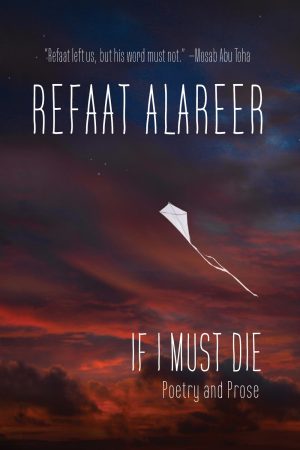
When he was killed in an airstrike on December 6, 2023, along with his brother, sister, and three nephews, his If I Must Die, do you remember?, «If I must die / Tell my story / Buy a piece of cloth / Some strings / Make a kite…» went viral around the world. He was criticised because he was an intellectual, yes, a professor of Literature at the Islamic University of Gaza, but he had not condemned October 7, and today, in the international press, there is next to nothing about this anthology of poetry and prose.
Because he compared October 7 to the Warsaw Ghetto uprising.
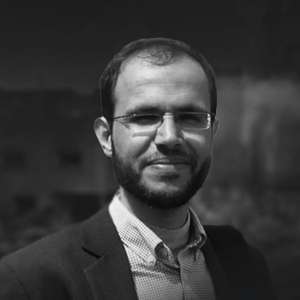
And it’s true. Read this book. He never condemned either October 7 or #Hamas, and indeed, when Hamas, after the #Abraham Accords#, drew closer to #Iran, becoming the spearhead of its Axis of Resistance, he viewed the support of Iran as a turning point. But reading this book, you also understand what his life has been like. A life, actually, like so many others, in Gaza. A life under siege, under total siege, with Israel that for a long time, calculated the minimum calorie intake for survival, 2,279 per person per day, to be precise, and did not allow in anything more, a life of brothers killed in airstrikes, cousins consumed by untreated cancers, friends gunned down in the street: a life in which families sleep apart, so as not to die all at once. And it is the only life he has lived. #Refaat Alareer# is a child when one evening, at a checkpoint, the Peugeot of his father, a labourer in #Israel, is hit by a bullet. There is no investigation, no accountability, nothing, just a fellow labourer murdered, his father with shrapnel everywhere, and a child who will forever fear suddenly losing everything. His neighbors try to reassure him, repeating: «It shall pass,» and that’s what he is repeated a couple of years later, when a stone smashes his head: «It shall pass,» the doctor repeats, and again, when he is accidentally injured in a raid: «It shall pass,» he finds himself saying once grown-up to the cousin of his classmate, killed at 13 by a settler, whose terminally ill mother Israel has just denied permit to have surgery outside Gaza.
«It shall pass.» «It shall pass.» And in the meantime, the only thing that passes is life.
«If I must die / Tell my story / Buy a piece of cloth / Some strings / Make a kite…»
But he does not give up. Never. Everything around falls, all of Gaza, but nothing inside. Not even in the last pages. The pages of this war. Pages deeply different from the previous ones: because like everyone else, Refaat Alareer immediately realises that this time, it is a war against everything, that there is no escape, and as he writes, no respite, Gaza is being hammered inch by inch, «I fear the worst, but also the best,» he says, should we survive, he says, how would we get over all this? – and the only weapon he has is a marker: but if the IDF comes, I will throw it at it, he says. It doesn’t matter that it is just a marker. He won’t give up.
And the truth is that he stood with Hamas, yes, with armed resistance, but he wished for an alternative. In 2018, when Palestinians demonstrated for weeks along the border, demanding its reopening, what was called the March of Return, he describes this sort of boundless sit-in, cheerful, colourful, where behind the youths with slingshots and stones are mothers and kids with barbecues. And Hamas is here, he says, it is true. But for the first time, it is here among everyone else, with no weapons. To see if, in this way, Palestinians will eventually be heard: and if the world, which has always said that the problem is violence, with no violence, will eventually keep its promise, and act.
We know how it ended.
«It shall pass»
Refaat Alareer believed in words. He was beloved, his lectures were like Robin Williams’s in Dead Poets Society, he was the #John Keating# of Gaza, and he had founded «Gaza Writes Back,» a collective of authors: #Palestine, he used to say, «is a stone and a story away,» because with stories you not only resist, you not only exist, but you win. Because in the end, victory does not come from weapons. It comes from the dominant narrative.
Isn’t this the true strength of Israel, after all? The true strength of #Zionism? Having convinced everyone that there was nothing in Palestine in 1948? Nothing and no one?
That with Israel, the desert bloomed?
And now, it is only defending itself? That its army is the most moral in the world?
This book, which mainstream media does not talk about, is that kite of If I Must Die. That piece of cloth, that string. To continue, from story to story. From poem to poem. From soul to soul, searching, despite all, for what binds us. «I am you,» he writes to his Israeli twin, the twin who does not know he is his brother, I am what you were done, I am the past that haunts and torments you, «And I fight and resist with the same tenacity you fought and resisted / I am not the you of now / I am the you of yesterday / But I am you.»
«And killing me / You kill you.»