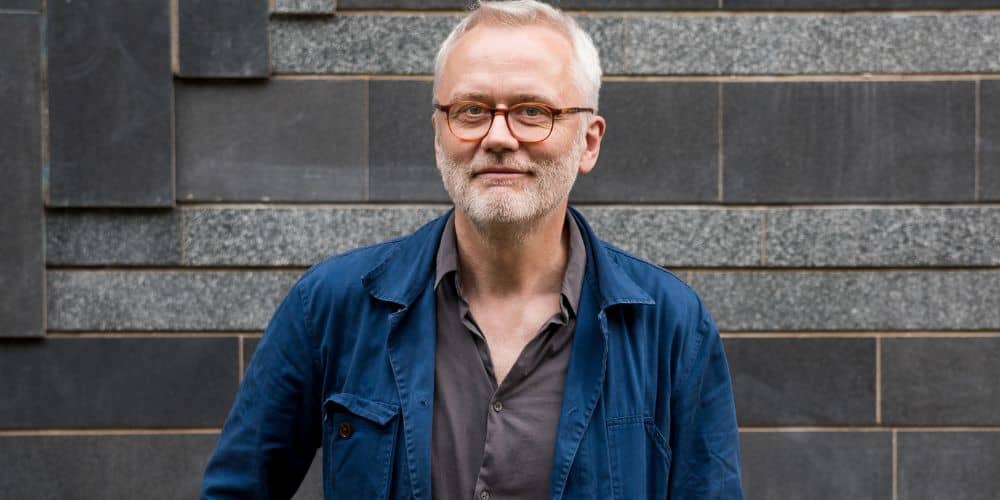
As #DOK Leipzig# returns for its 67th edition, Artistic Director Christoph Terhechte reflects on the growing role of documentary festivals in addressing today’s global complexities. From 28 October to 3 November 2024, the festival will present 209 films and XR works from 55 countries. This year’s programme reflects various topics and styles, from personal and collective histories in the International Competition to animated selections exploring fantastical narratives and post-apocalyptic futures.
In this interview, Terhechte provides insights into DOK Leipzig’s curatorial approach, its role within the European festival landscape, and its ongoing dedication to celebrating diversity and thought-provoking perspectives in documentary.
What role does DOK Leipzig play within the broader landscape of European documentary film festivals? How do you see DOK Leipzig positioning itself among its peers?
Christoph Terhechte: That’s a really interesting question, and it’s particularly complicated given the current political landscape we’re all navigating. It feels like we’re in a moment where documentary film festivals—and perhaps festivals in general—are increasingly expected to fill gaps that politics either can’t or won’t. Documentary festivals, like ours, have a unique responsibility to help people understand the world they live in, especially in times of #conflict. But this extends beyond the obvious geopolitical issues we see in the news.
Take, for example, the war in #Ukraine, which has been going on for some time now, or the longstanding Israel-Palestine conflict. We even think about conflicts that don’t receive as much attention, like what’s happening in #Sudan or other under-reported crises around the world. Our role as a festival is not to solve these problems—obviously, that’s far beyond our scope—but we can help our audiences make sense of them. We can offer different perspectives that people might not have considered. It’s a way of contextualising these conflicts in a way that’s accessible and empathetic.
But DOK Leipzig’s role isn’t limited to those big, newsworthy conflicts. It’s also about offering a window into everyday life in different parts of the world. Even something as simple as documenting the daily life of a family in Uruguay—though, to be clear, we don’t have a Uruguayan film this year—can be eye-opening. Films like these help foster empathy and understanding that might not be possible through other media.
The essence of a documentary film festival is to create empathy, tolerance, and a broader understanding of the human condition, especially in places and lives we rarely think about. In a world that feels more divided and polarized by the day, festivals like DOK Leipzig can play a crucial role in bringing people together, even if only in the form of thought and perspective.
It feels like we’re in a moment where documentary film festivals—and perhaps festivals in general—are increasingly expected to fill gaps that politics either can’t or won’t.
From a programming standpoint, how does DOK Leipzig differentiate itself? Is there something specific about the films you select that sets them apart from films we might see at other top documentary festivals, such as IDFA or CPH:DOX?
Christoph Terhechte: In the past, the distinction between festivals like DOK Leipzig and #IDFA was more pronounced. IDFA, for example, was more focused on certain types of documentary filmmaking, and the same could be said for CPH:DOX. But over the years, these lines have blurred. We’re now seeing more overlap, especially with the changes at IDFA under #Orwa Nyrabia#. There’s more competition for the same films, which we’ve had to adjust to.
It’s hard to categorise festivals based solely on the films they program now, but what we try to do at DOK Leipzig is maintain a strong focus on the balance between form and content. We’re drawn to films where the way a story is told is as important as the story itself. That’s not to say we don’t value content-driven films, but we’re interested in how filmmakers experiment with form—how they play with visual language, structure, and storytelling techniques to express something deeper than just the facts.
In some cases, the form becomes the content. The way filmmakers look at the world and their framing, editing, and pacing choices can reveal more about the subject matter than the content alone ever could. Often, it’s not just about what’s being shown on the screen but how it’s being shown that makes all the difference. At DOK Leipzig, we encourage filmmakers to explore this interplay between form and content to push the boundaries of traditional documentary filmmaking.
There’s a misconception that documentaries are merely about presenting facts. But that’s far from the truth. Documentaries speak to our subconscious, our emotions, in the same way that fiction films do. They resonate with us because of the information they present and how they connect with us on a deeper emotional level. So, at DOK Leipzig, we prioritise films that challenge this conventional idea of documentaries being just about facts and reality. We want to highlight that documentaries are artistic expressions filled with intention, creativity, and perspective.
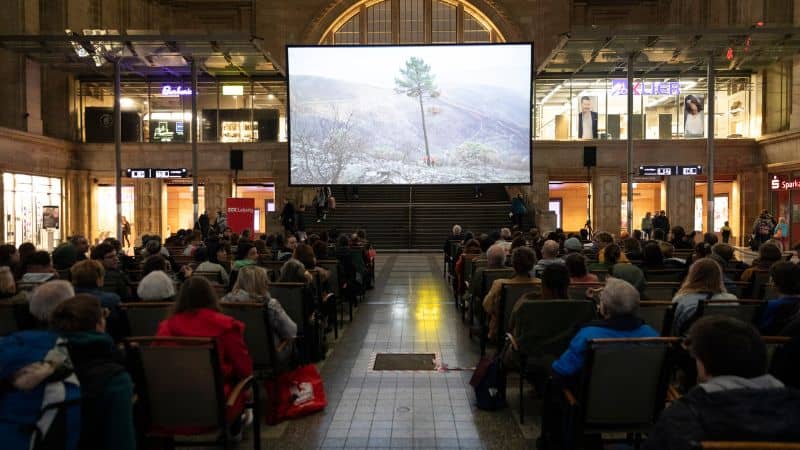
What you’re describing seems to go beyond the traditional idea that documentaries are just about «truth-telling.» Is it more about perspective?
Christoph Terhechte: Exactly. It’s about #perspective, not just truth in the conventional sense. Of course, documentaries are rooted in reality—they’re based on real events, real people, real situations—but what’s more important is how the filmmaker interprets that reality. Every filmmaker comes to a project with their own set of experiences and their own worldview, and that shapes how they tell the story. So, in many ways, documentaries are less about presenting an objective truth and more about exploring subjective truths—how we as humans experience the world around us.
And that leads directly into the broader conversation about #diversity and #inclusivity. For us, diversity isn’t just about representation in terms of race, gender, or class, though those factors are incredibly important. It’s about ensuring a diversity of perspectives. We want to show films that offer different ways of seeing the world and different interpretations of what it means to be human.
We want to show films that offer different ways of seeing the world and different interpretations of what it means to be human.
How does DOK Leipzig navigate politically sensitive topics? For instance, how does the festival respond to the current situation in Gaza and Israel, especially within the German political landscape? Is there a particular approach you take when curating films that touch on such delicate issues?
Christoph Terhechte: We try to remain as open and responsive as possible to what’s important to filmmakers. We also don’t set a rigid theme in advance. The films come to us, and from there, we build the program based on what filmmakers are submitting and what’s happening in the world.
Now, with conflicts like the one between #Israel and #Palestine, it’s difficult. People expect us to comment on it through our program, but finding the right films can be a challenge. This year, for example, I watched every film I could that addressed the conflict—whether it came from Israeli filmmakers, Palestinian filmmakers, or others from the broader region. But I didn’t find any film on the most recent events, post-October, that felt comprehensive enough to include.
That said, we have two films in the program that deal with the larger Israel-Palestine conflict, but these are only recent, not brand new, works. They were made before the escalation in violence last October. Neither film is premiering at our festival, nor is it in the international competition, but we felt they were still important to include in the audience competition. These films may not address the current situation in its entirety, but they provide valuable context to help viewers understand the longstanding dynamics at play.
On the Ukraine front, we’ve also seen a shift in the quality and depth of submitted films. In the first year after the Russian invasion, many of the films we received were too immediate—too raw to fully process what was happening. But now, two years into the conflict, the films we’re seeing are more mature and more reflective. They’re tackling the complexities of the war in ways that weren’t possible in those early months. There’s one film in particular, which we’ve included in the international competition, that’s incredibly hopeful. It tells the story of an older woman in Kyiv who has been defending her garden from real estate developers for years, and now, she’s defending it against the war. It’s a deeply human, beautifully crafted film that offers a kind of hope we don’t often see in conflict documentaries.
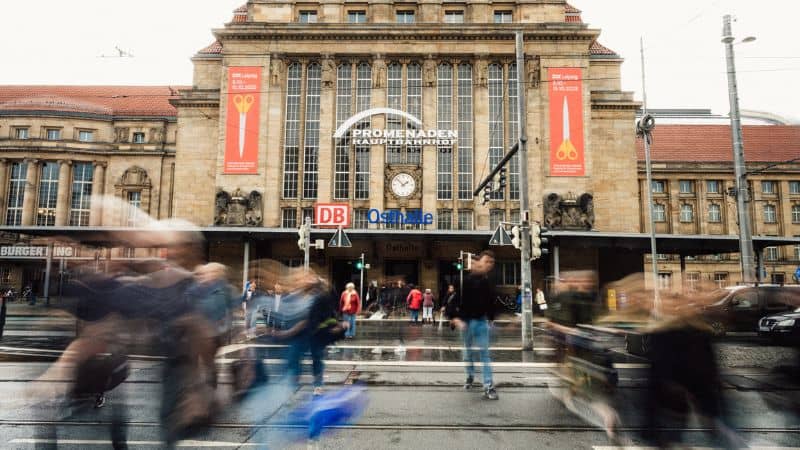
Do you think we’ll see a similar timeline for the Gaza-Israel conflict, where the most profound films might not come out until a year or two from now?
Christoph Terhechte: Yes, I think that’s exactly what will happen. These kinds of films take time to develop, especially when the conflict is still ongoing. It’s hard for filmmakers to make sense of such chaotic situations in real-time, and that’s why we often see the best films about conflicts like these emerging a year or two after the fact. They need time to reflect, process the events, and figure out how to tell the story in a meaningful and coherent way.
It may take some time to fully develop an effective field of work on the subject, especially as the situation continues to evolve. There will probably be missing pieces if the films come out too quickly, so perhaps next year or the year after will be more telling. For us in the media, observing this topic raises questions about double standards, particularly regarding exposure. For instance, the widespread boycotting of films funded by the Russian state hasn’t extended to Israeli state-funded films…
Christoph Terhechte: First of all, I can’t say that I see these two conflicts as comparable. Of course, you can always compare, but you will find they are very different, so applying the same rules doesn’t work. However, what’s very clear is that we are getting, almost daily, requests from German authorities to ensure we fight #antisemitism wherever we can. What I’m not seeing are similar requests to combat anti-Arab resentment, which is just as pervasive.
We’re trying to do something that is certainly related to German history, but we’re very one-sided when it comes to this conflict. We sometimes let statements that label Palestinians in general as terrorists pass, but we’re far more sensitive to antisemitism. And, of course, I stand against antisemitism—that’s not in question. But I see a danger where the fight against antisemitism could be instrumentalised to marginalise or even eliminate Arab or Islamic presence in the West.
I hesitated with the word «Islamic» because many Arabs are not Muslim. Many are Christian, and the Arabs I know are almost entirely atheist. So, the problem is not just #racism but the fact that we’re not combating it the way we should.
What’s important to me is that we find a way to foster dialogue within the festival. We need to create a space where people with different positions are willing to have an open debate and talk with each other in a civilised manner. Screaming at each other, exaggerating, and using provocative language that triggers the other side doesn’t help anyone.
What’s important to me is that we find a way to foster dialogue within the festival.
From the festival’s perspective, it’s open to voices speaking out. If, for instance, someone were to use their Q&A time at the end of a screening to discuss this topic, would the festival be open to that kind of discourse?
Christoph Terhechte: Absolutely. We do not censor the speeches of filmmakers who come to the festival. They are our guests, and it’s their choice if they want to make a statement. Every film is, in itself, a statement. And if we host Q&As and limit the possibilities of what can be said, we might as well just drop the idea altogether and show films.
Anyone invited by the festival is given a platform, and they can use it. What they shouldn’t use it for, and where we would intervene, is hate speech. We won’t tolerate racist, antisemitic, antiarab, and antimuslim slurs, nor will we accept generalisations about Jewishness when speaking about Israel.
However, anyone is welcome to criticise the IDF or the Israeli government. Equally, anyone is welcome to criticise Hezbollah or Hamas as long as they aren’t using the platform for racism, antisemitism or antiarab, antimuslim sentiment.
Let’s switch gears now and talk about animation at the festival. I’m interested in the intersection of animation and documentary. How do these two genres complement each other in a festival setting?
Christoph Terhechte: I’m really happy to have a job at the only documentary film festival that dedicates such a significant space to animation. In fact, I’ve expanded that space by creating a new competition solely for animated films of all lengths, from shorts to feature films. It’s unusual, sure, but maybe that’s why it works so well. It’s one of the things that makes the festival unique—a sort of unique selling point, if you will.
I think animation and documentary have more in common than people might think. As I mentioned earlier, documentaries are not just about the facts. If they were, you could just write them up in a text. Even with texts, different authors bring their own voice and style—it’s not purely factual. Fiction, or rather storytelling, speaks to the soul in ways that are often more direct than documentaries or even fiction films typically do.
Animation enhances this quality. It complements documentary films and offers opportunities for hybrid forms, like animated documentaries. Animation can fill the gaps when real images are unavailable or when using certain images might not be appropriate or possible. But beyond that, animation has a way of engaging the audience’s mind differently—it’s less tied to factual content and allows for a more visceral, subconscious experience. It’s a powerful tool, and I want to bring these two worlds—documentary and animation—closer together at the festival.
Animation can fill the gaps when real images are unavailable or when using certain images might not be appropriate or possible.
With that in mind, how does this approach influence how you curate the animated films at the festival?
Christoph Terhechte: Honestly, it doesn’t affect the curatorial approach too much. Even in the past, many of the animated films shown at the festival didn’t strictly adhere to a documentary approach. We’re open to fictional storytelling as long as the films touch on something relevant to the human condition. We’re not interested in escapist fantasy or pure entertainment. Whether animated or not, the films we select need to engage with something meaningful for the audience. So, our curatorial process remains pretty flexible in that regard.
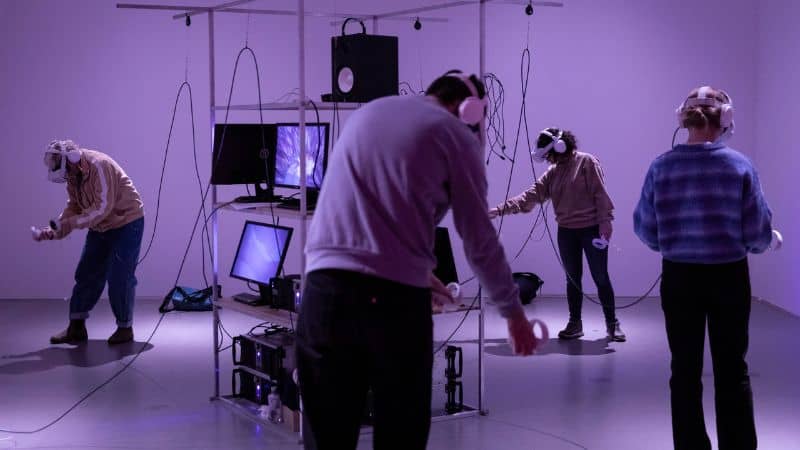
Another aspect of the festival I’d like to touch on is the rise of new media. Obviously, «new media» is a broad term—it can encompass everything from #VR to #AR, even podcasting and gaming. What patterns have you noticed regarding submissions from creators in this space, and how do audiences respond? Do you think new media might one day hold equal weight alongside traditional film at the festival?
Christoph Terhechte: Submissions overall have increased by about 15% this year. I don’t know the exact numbers for VR or XR projects, but interest in this field is definitely rising, just as it is with animation and documentary submissions. «New media» is an interesting term because its definition shifts over time—what’s new today will be old tomorrow.
For the festival, we focus on our VR/XR program, DOK Neuland, curated separately from the main film competitions. We have three main committees for selecting films: one for animation, one for international documentaries, and one for German documentaries. The DOK Neuland program, however, is overseen by a different team with its own head. While we sometimes see overlap between the film programming and the XR program, they’re largely distinct.
This year, for example, we have a project that premiered at #Sundance. It’s an interactive documentary about the Rwandan genocide with over 10 hours of footage. It uses AI to generate different edits, so each viewing can be different. You can experience it in a cinema setting or with a VR headset, and at our screenings, the audience will actually vote on what happens next. They’ll use their smartphones to choose the next scene, adding an interesting interactivity layer.
That said, we’re still very much a film festival. We’re not a media arts festival, and I don’t foresee us moving in that direction.
what’s new today will be old tomorrow.
So, for the foreseeable future, traditional film will remain the core of the festival?
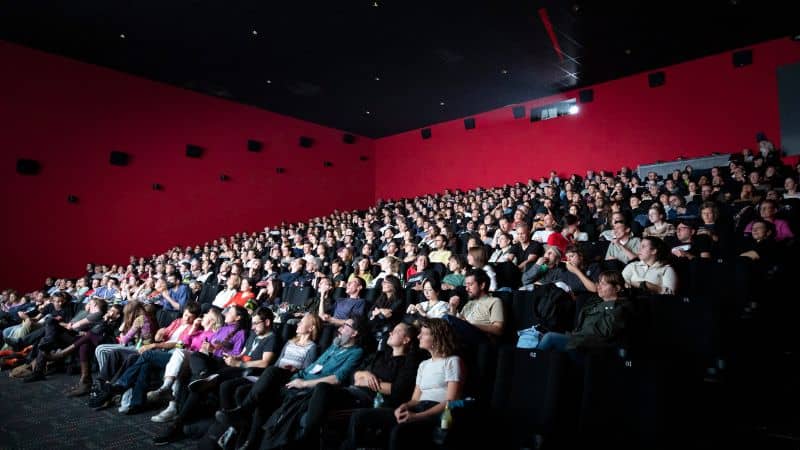
Christoph Terhechte: Absolutely. There’s still something irreplaceable about watching films together in a cinema. The experience of seeing a film on the big screen, without distractions, is far more intense than watching it at home. You can feel the audience’s reaction; that collective experience amplifies the film’s impact. I hear the same from other curators, too.
VR, by contrast, can be isolating. It’s a completely immersive experience, but you’re closed off from everyone around you. It’s something we’re aware of, but it hasn’t been explored as deeply as the psychology of traditional film-watching in a cinema.
You recently announced a retrospective on the Cold War era. Could you explain how you arrived at that theme?
Christoph Terhechte: Retrospectives are planned well in advance. In fact, we’ve already decided on next year’s retrospective. The process takes about a year because of the extensive research and preparation involved. In recent years, our retrospectives have focused less on individual filmmakers and more on the historical context in which the festival itself took place.
Germany was divided for over 40 years, and the Berlin Wall stood for 28 of those years. DOK Leipzig played an important role in that landscape, serving as a meeting point for filmmakers from East and West. Even when it was under strict government control, the festival still found ways to show films that weren’t aligned with official cultural policies. This year’s retrospective explores how much freedom the festival had during that time—where the limits were, what was allowed, and what wasn’t.