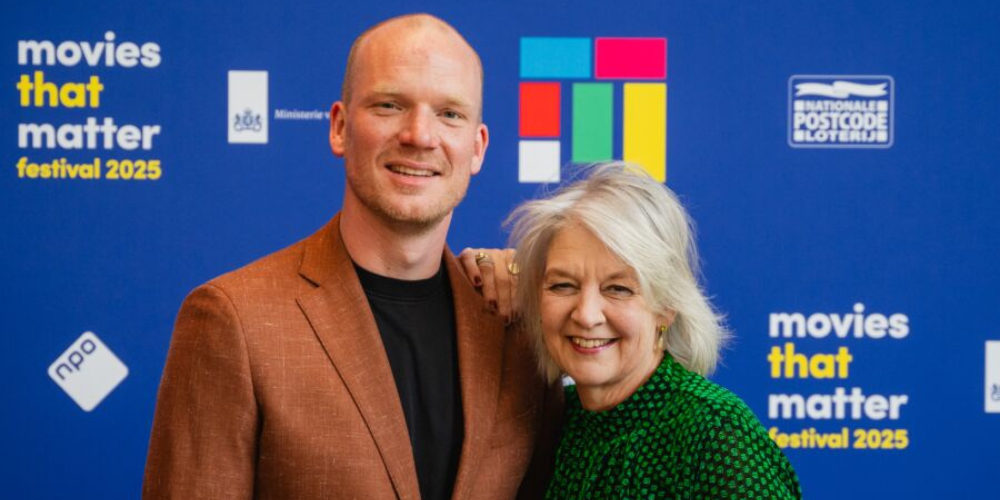
Movies That Matter marks its 20th edition from 20 to 28 March 2026 in The Hague, opening with Poh Si Teng’s American Doctor and presenting a programme for 2026 that includes world premieres, competition sections, educational strands, and industry activity. The festival takes place at a moment when political pressure on culture, internationalism, and human rights discourse is sharpening across Europe and beyond. In the Netherlands, Geert Wilders has remained one of the most influential figures on the far right, while internationally, Donald Trump’s return has reinforced a harsher climate around foreign aid and public institutions. The festival arrives at a significant moment for the organisation. In February, Movies That Matter announced that from 16 April 2026, it will adopt a single-director structure in response to ongoing financial pressure. Under that change, Margje de Koning will become Managing Director-Trustee, while current Business Director-Trustee, Laurens Korteweg will leave after a transition period ending 15 April.
Our conversation with Korteweg takes place within that moment. In the conversation, Korteweg speaks about the restructuring, the pressures shaping human rights film culture, and the challenge of sustaining institutions committed to political and social engagement.
We’ve been trying to find alternative funding in the international arena, but we’ve seen a significant decrease in available funding and a lot of hesitation among decision-makers.
How did you first get into this role? Were you with Movies That Matter before, or did you come from elsewhere?
I spent 10 years at World Press Photo before Movies That Matter.
That organisation has a similar mission: it’s about images. And now this is about movies. I really believe in the power of imagery, whether it’s stills or moving images, because we need it. That’s why this step to Movies That Matter made a lot of sense.
I started in September 2023, but it’s been a very challenging period. I’m not sure how familiar you are with the challenges in the Netherlands, but they’re pretty similar to the challenges everyone is facing.
I’m familiar with the Netherlands as I did my master’s at the UvA. World Press Photo was one of my favourite exhibitions.
In terms of the financial environment and the temperature toward cultural infrastructure in the Netherlands, what has changed? Amsterdam has long prided itself on a strong cultural sector. What’s happening now?
When I started, I found a financially stable organisation. Like similar organisations, we depend on subsidies and funds for at least 80 percent of our funding. That’s a tricky business model because such dependence makes you vulnerable to whatever change a government sees, or a private fund sees.
Trump’s new term was a huge blow to international aid. Within a couple of months, he dismantled USAID from a whole lot to nothing. It also coincided with the formation of a new government in the Netherlands. Geert Wilders of the Freedom Party won and formed a very right-wing cabinet, which immediately affected spending on culture, international development, and human rights. For example, we have been with the Ministry of Foreign Affairs since 2006. After 20 years, they had to cancel the collaboration this year, which is a huge blow to our finances.
The ironic part is that Movies That Matter is doing relatively well. We became an Oscar-qualifying festival last year. We saw a huge increase in visitors. But Movies That Matter, as an organisation, is based on three pillars. We have the festival, education, and international support. The first two are doing relatively well. They’re funded well, still a challenge, but okay. It’s mostly at the international support branch, where it’s very tricky.
We’ve been trying to find alternative funding in the international arena, but we’ve seen a significant decrease in available funding and a lot of hesitation among decision-makers. And we present ourselves as a human-rights organisation, which may at this moment be too tricky for organisations to commit themselves to. We program human rights movies; we just locked the schedule, so you never know what’s on the show in March, and people may be more hesitant to commit financially or otherwise because it might reflect badly on them, especially American organisations.
We haven’t managed to replace the funding cut by the Ministry of Foreign Affairs. That funding accounted for about 12-13 percent of our annual budget. The shock forced us to make a drastic decision. As we said in the announcement, we want to make sure we can focus as much as possible on our mission and impact. That’s why we decided to go from two directors to one. It’s a manageable structure and solution.
It will ask a lot of Margje de Koning. She’ll be the executive director and do it on her own starting April 15. But at least this lets us focus on what really matters. I’ll use the next few months to make a smooth transition.
The shock forced us to make a drastic decision.
During the process of searching for alternative funding routes and speaking to organisations that are hesitant now, what kinds of reactions have you been getting? Is there a difference between Europe and North America?
The general line is that many funds say they’re focusing on current commitments. They’re not willing to take on new initiatives, partially because they don’t have more money.
Our costs go up due to inflation and quite quickly, at least 4 or 5 per cent a year. Hardly any funds compensate for this. With a budget of about 2.5 million, we need to find about 100,000 euros per year to do the same without doing anything extra.
Many funds are reconsidering their strategies, which can lead to a year-long pause. An influx of money stops, money is scarcer, and competition is bigger. Especially with USAID cutting back drastically, competition has got so fierce that, for example, we might be competing for the same money as Doctors Without Borders, which is doing life-saving fieldwork. That’s where it gets tricky to fund a human rights film organisation.
At the same time, education continues to grow and is doing very well. It’s seen as a good way of involving youngsters or students. There’s a bigger emphasis on that because we need a well-informed future generation. Same for the festival; also well-funded. The Oscar-qualifying status contributed. So it’s not only bad news. Education and the festival are doing great.
But it’s ironic times and a reflection of the world. Our international outlook has decreased. Like many countries, we’re increasing defence spending, and that comes at a cost to other areas. And not many people are optimistic that this new government will lead to higher spending on human rights or culture.
It’s frustrating when you see organisations doing good work and growing in reach, yet this financial volatility keeps returning. And it’s not just affecting Movies That Matter. Are other prominent organisations in the Netherlands also being affected? For example, World Press Photo?
Specifically, World Press Photo, I don’t know. They earn most of their money through renting out the exhibition. As global cultural financing declines, there is less money available to rent the exhibition.
The Netherlands Film Festival recently announced the same decision, to go from two directors to one, also due to financial pressure.
We’re at the Amnesty International building in Amsterdam because we began as the Amnesty International Film Festival. They had to restructure and let some people go. Same for Free Press Unlimited.
If we look at government funding, especially the Ministry of Foreign Affairs, it has changed a lot. There’s less money. They have different budgets: human rights, public relations, culture, and they have all gone down. They’re also closing embassies around the world, so there are fewer Dutch embassies and fewer possibilities to work with.
What then happens is we start looking for new income structures. Everyone is trying to launch a friends program and identify major donors who might chip in $5,000 or $10,000 per year for the next 5 years. But we’re all chasing the same money.
Diversifying income is the easiest solution, people say, but we’ve been trying for a long time. We’re trying to boost ticket sales, and it’s working; we’re growing 10 to 15 percent per year. But there is a limit.
I have trouble with the word «subsidy» because of its connotation. Basically, it’s an investment. You invest in it, and we give back to society. That’s how taxes should be used, like why we pay taxes for running water we can trust.
The tricky part is how to redevelop ourselves to meet new standards. How can we work together with other organisations? We’re all facing the same challenges.
Like many countries, we’re increasing defence spending, and that comes at a cost to other areas.
Coming from a US mindset where government arts funding is limited, private funding becomes the default. Do you see this trajectory pushing organisations like yours to rely more on private funding models?
I should have been clearer. We do receive government funding, but it’s no more than 20 percent. We have the Postcode Lottery, which is also around 20 per cent. Most of it is actually private funds, in a different tradition than in the States.
Many of us are geared toward wealthy individuals. The post-war generation will be leaving us in the next decades, and they’re quite wealthy. Private funds can be a reliable source of income, but they tend to commit less to longer-term collaborations. It’s often one year. Short-term commitments make it very difficult to plan and budget. You get pushed into survival mode. We want to develop a vision of change, something on the horizon, but it’s difficult when you focus on the next twelve months. If we had partners who said, «We’re with you for the next five years, this is what you get, do something with it,» that would be brilliant. At the same time, it’s up to us to deliver on the trust we ask for.
In your conversations with funders and decision-makers, how are you quantifying and presenting the social investment you’re making?
That’s the tricky part. That’s when we start talking about impact and impact measurements. We’ve felt this for years: quantify your impact, present it consistently, and show it’s a good investment. It was the same at World Press Photo. We can’t just say, «We show a movie, maybe something happens.» We do have a bigger responsibility.
Measuring and quantifying are difficult. At the same time, the Council for Culture has conducted research on the payback of investment.
I don’t have the numbers ready yet, but it multiplies every euro by a couple of times. There is cultural payback. It provides people with an experience. If you look at the real price of a ticket at any festival, it’s more than the 13 euros and 50 cents that we ask. The payback is that joint feeling of seeing something, then talking about it. We have in-depth after-talks to contextualise, give meaning, and bring people from the field.
It is tricky to quantify, but I also ask: what if film festivals didn’t exist anymore? Or cinemas? Smaller theatres rely on subsidies. The payback is huge. But in a capitalised world, that soft argument is often not enough. We all have a responsibility to shift the culture from elitist to one that benefits everyone. We all need a good movie now and then. Our programming can be tough, but we help you through it, provide context, and leave you with a different mindset. That’s valuable. Making that case is not always easy.
Short-term commitments make it very difficult to plan and budget.
Do you see further drastic changes down the road, or do you see this as an end to major adjustments?
We very much hope this marks the end of major restructuring. We need everyone to fulfil our mission. We found a creative solution to keep doing what we’re good at.
It will depend on future commitments from larger funders. Many are committed: the national Postcode Lottery, the municipality of The Hague, and the Dutch Film Fund. But it’s hard to predict year-to-year whether everyone stays committed. If we lose one partner for 100,000 euros, that’s problematic.
We look forward to the future with confidence, but nothing is set in stone. If someone pulls back unexpectedly, we go back to the drawing board. It’s a drastic decision, but as an organisation, we are doing quite well in how we see and measure impact. I think we’re having the most successful year ever, and the same will hold for the festival.
It’s interesting to see that you can be very successful even while undergoing major restructuring. I’m proud of how we’re doing now. I’ll leave the organisation in Margje’s and the team’s hands. Two and a half years is not what I planned when I signed, but in my role, it’s my job to look at the organisation objectively. This is what is needed now.
What are your plans afterwards? Do you have anything lined up?
I already joined the board of the Dutch photo competition, De Zilveren Camera. That’s for my love of photography. I missed it and wanted to stay close. We had the award ceremony last week. It was a beautiful day.
There is demand for people with my profile, because many organisations need to rethink strategies and structures. I’ve been in touch with quite some people already, just from putting out a LinkedIn message.
I’m going to take some time to consider what is best. After April 15, it coincides with my children’s holidays, so I’ll spend time with them. Then we’ll see. It might still be the film sector, or it might be somewhere different. I’m confident I’ll find something nice.
Do you have a message for the wider community around Movies That Matter, the audience and the wider cultural public? What can be done day-to-day to get through this moment, or enact change?
In essence, it does not come down to ‘go and vote wisely’. Or in our case, go and buy a ticket, because that helps us through the day. But it’s not true. We need something much bigger. We need a different appreciation of culture in society. Not see it as something you can easily get rid of if needed, but as something integral to life. Because we box it so well, «culture,» it becomes something you can pick up and throw away. But you can’t box it like that, because everything here is culture.
If I walk on the canals in Amsterdam, that’s a gift of culture—one inspirational walk. Culture is how we grow in our appreciation for each other, develop empathy, and encounter different worldviews. Through high art, old painters from the 16th century, or American Doctor, our opening film. It shapes our worldviews to understand others.
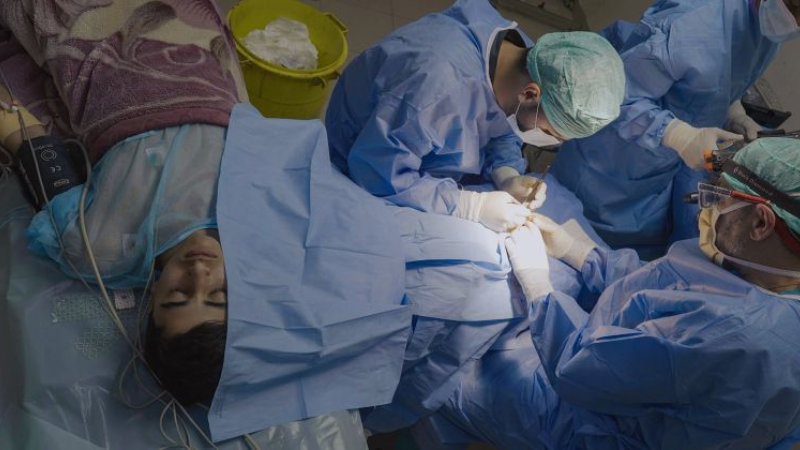
If we look at Gaza, Sudan, Ukraine, we need input to understand what’s happening. We need newspapers, documentaries, films, and art. I see all of that as culture. We should see it as part of life. And very practically: keep consuming culture, whether you pay for it or not. Go to a museum, buy a ticket to one of our movies, to World Press Photo, to the Van Gogh, or smaller things. We all depend on audience interactions. Without an audience, we’re gone. So keep being an audience.