The atmosphere of Trieste exists at a convergence where Italian and Slavic identities coexist in a shared cultural space. Its history as a geographic meeting point also underpins the ancient city’s cinema culture. The thirty-seventh Trieste Film Festival takes place from January 16 to 24, 2026, and remains the most significant Italian platform for cinema originating from Central and Eastern Europe. The documentary competition includes ten new films, all Italian premieres.
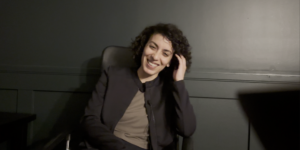
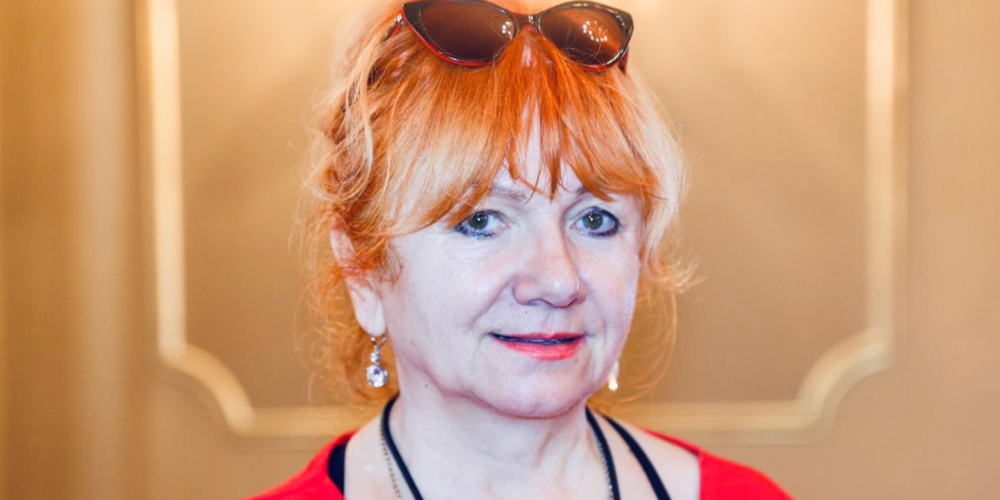
Rada Šešić, who curates with Giuseppe Gariazzo, describes the selection process to Modern Times Review as an act of listening before framing. «We give space to the filmmakers very openly, and then we see what we are saying with the selection,» she explains. «It’s not about building a slogan or a topic. It’s about building trust between the films.»
Šešić’s understanding of what Trieste is ‘for’ is about refusing simplification, especially in definitions of «the East,» and treating Central and Eastern Europe as an artistic lineage.
Defining «the East»
Šešić’s understanding of what Trieste is «for» is about refusing simplification, especially in definitions of «the East,» and treating Central and Eastern Europe as an artistic lineage. «Eastern European cinema was always interested in telling important stories, but also finding the cinematic way to tell them,» she says. «This young generation is relying on that tradition. They look for their singular voice, how to tell the story that they found.» She links this to the political and cultural conditions that shaped generations of filmmakers across the Balkans, noting that «the circumstances of making films and being those artists, brave artists who spoke up, is continuing today.» Šešić favours films that possess an internal rhythm in which the viewer can sense the creator’s physical and intellectual presence, or «how the filmmaker breathes».
On tone, Šešić’s programming philosophy manifests in its demanding nature. In her view, seriousness does not automatically mean default heaviness. A film can be made from punishing material and still carry a tonal intelligence that prevents the audience from shutting down. «It can be charming and have humour, but it does not spoil the importance of the story. Even in a heavy and dire story, you can find charm and lightness».
The 2026 competition
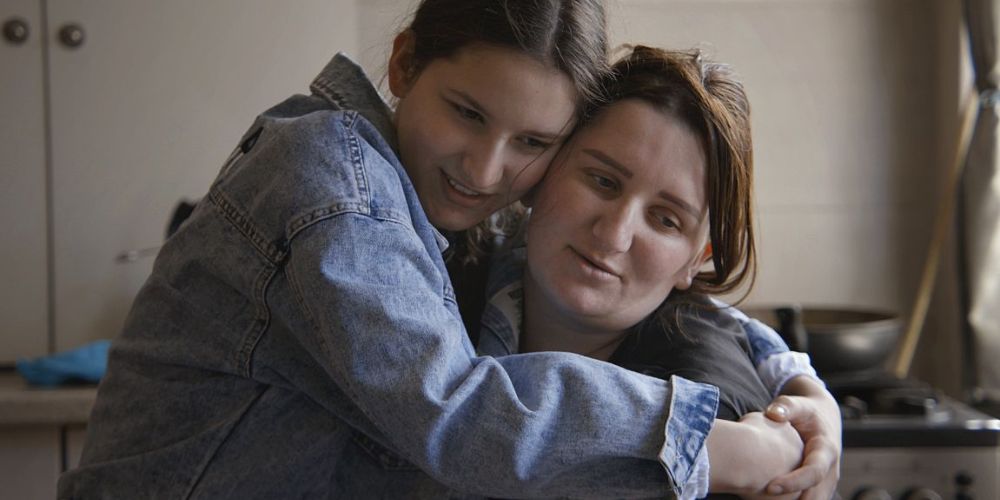
The 2026 competition’s ten films move through war, migration, labour, and the afterlives of institutions. One follows a Russian teacher in exile trying to rebuild a language of conscience (Active Vocabulary). Another tracks a mother pulled into surrogacy (9-Month Contract). At the same time, another follows a woman in a Moldovan village who refuses her expected role in a slow, renegotiated response to community pressure (Electing Ms Santa). Further films revolve around topics such as work, refuge, ageing, and the residue of earlier political systems on present-day routines (Welded Together, Outliving Shakespeare, The Kartli Kingdom). Šešić notes that these films «move through the microcosm of private lives, but together they create a mirror for the political condition of our time.»
Šešić’s language around cinematic «accessibility» makes clear that she is not interested in documentary as a soothing informational delivery system, and she rejects the idea that a film should be designed for partial attention. «I am always trying not to cater to the expectations of the audience in a simple way,» she insists.
Involved in overseeing both Sarajevo’s Docu Rough Cut Boutique and Trieste’s own Last Stop Trieste, Šešić’s work sits within a broader European network of documentary development but will not allow these platforms to become automatic pipelines to competition. «We are all proud when a film we helped becomes visible, but it must stand on its own,» she says. «It’s not guaranteed,» she adds firmly. «That would be a trap for a filmmaker.» For her, the real value is visibility and contact.

Filmmaker respect
When Šešić speaks on the origins of these films, she points to places where documentaries are made with minimal support and in openly hostile environments, yet still find their way. «We ended up having films from countries that we do not see that often,» she says, specifying the likes of #Moldova, #Kazakhstan, and #Georgia. She highlights that «filmmakers there get little or zero money and support, yet they create films that stand shoulder to shoulder with those from major industries.» On demographics, she also notes that women direct half the programme and that several films are debuts. «Our task is to give space to new names and new talents,» she says.
«I have huge respect for the filmmakers who are making documentaries and devoting eight to ten years to tell one strong story,» Šešić says. «Not to earn money and not to earn fame, but really to communicate.» She then pauses and adds, «You can feel when someone made a film because they had to. That urgency, that personal necessity, is what I look for.»
Festival seasons are loud, and documentary culture is often caught in an immediate-reward structure. But Šešić measures something slower: endurance. «If a film still works in ten years, it means it was made with emotion.» In a timeline culture conditioned to scroll past suffering and forget the capacity of its own attention, this promise of endurance is nothing short of a provocation for the present, and Trieste seems a fitting place to make that wager.