There are not many things that make our times better than previous ones. The modernist idea of #progress assumed that the future is better than the past because that is the logic of #history, but we stopped believing in it long ago. Now, most of us are probably well aware that serious problems remained unresolved in the past and are now pilling in front of future generations. #Climate disaster is the most obvious one. The reason why humanity today is better than it once was is that we have finally started to unmask some of the most obviously false ideas that were taken as given truths because they facilitated the smooth functioning of the world. #Roland Barthes# called them myths, but neither he nor his colleague philosophers fully understood the seriousness of the problem. Take just the major one, the equality of all people, which is the basis of democracy. The French Revolution proclaimed the ideals of freedom, equality, and brotherhood. Still, France abolished slavery in its colonies much later. Through West and Central African CFA franc, two currencies still in use in former colonies, it maintained colonial relationships to this day. In his meticulous research, #Michel Foucault# revealed how other, much more subtle relationships of power that make people fundamentally unequal were tightly woven into democracies of the #Global North#. But we are only now beginning to grasp that the relationships of power that form the very fabric of our societies involve actual violence. The only way to stop it is to start openly talking about it.
Being young
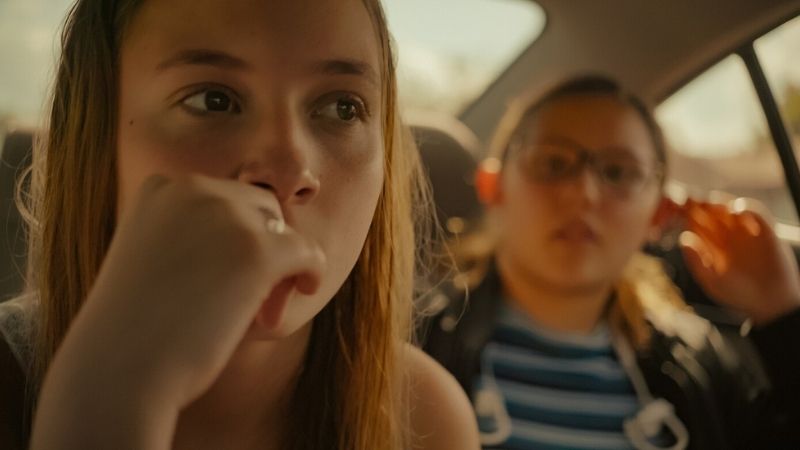
That is the purpose of Cusp, a documentary about three young girls spending their holidays in a small American town. The directors are two young women too: Parker Hill, a New York-based photographer and filmmaker, and Isabel Bethencourt, who studied cultural anthropology, camera, and documentary filmmaking in California but now lives in NYC. Cusp is their first feature documentary, and they were awarded the Special Jury Mention for Debut at #Sundance 2021 festival. What they did is close to magic.
The film starts as a personal portrait, but it ends by showing female adolescence in a new perspective. They do not abandon the traditional codes of the representation of female youth as frivolous and problem-free; it is all there, the desire to please, the fascination and care for one’s own body, the nudity, fragility, curiosity, and rebellion. Yet all this contrasts the reality the film documents without ever showing it directly. In the film’s first scene, the girls wait for their friends who are shooting with machine guns. Still, the scene soon dissolves in the sunny summer holiday vibe. It remains in the viewers’ memory as part of an everyday routine in a particular place where the girls are growing up. Only gradually it becomes clear that the directors are portraying teenage girls growing in a #Texas military town but are addressing teenage girls and film audiences globally.
What they did is close to magic.
A rite of passage
Growing up was believed to be an unproblematic “rite de passage”, sometimes accompanied by hormonal imbalances and often causing problems to the parents. Still, for the teenagers themselves, this was considered to be an altogether positive experience leading to a highly desirable outcome, the enrolment into the elite club of adulthood. As adulthood implies social powers denied to the children, this passage was always related to power relations. It was believed to require guidance and supervision, a sort of symbolic violence. Foucault believed that the societies of #Global South#, as they are becoming more “civilised,” substitute physical violence with ideas. Cusp‘s subtle analysis shows that reverse processes are actually taking place; the ideas do not replace violence. Still, the ideas – particularly the idea of a young growing-up female – facilitate violence. The scary revelation is that those who feel entitled to being violent are not necessarily the parents; it might come from everywhere, from family friends, even their male friends and companions. The play with machine guns turns out to be an introduction to a sinister reality that is evoked in dialogs or, often, in the sudden outbursts of violence by the girls themselves like in screaming, or when they turn it against themselves, like in a sublime sequence in which one of the protagonists, with exceptionally aggressive gestures, combs her hair.
Mothers
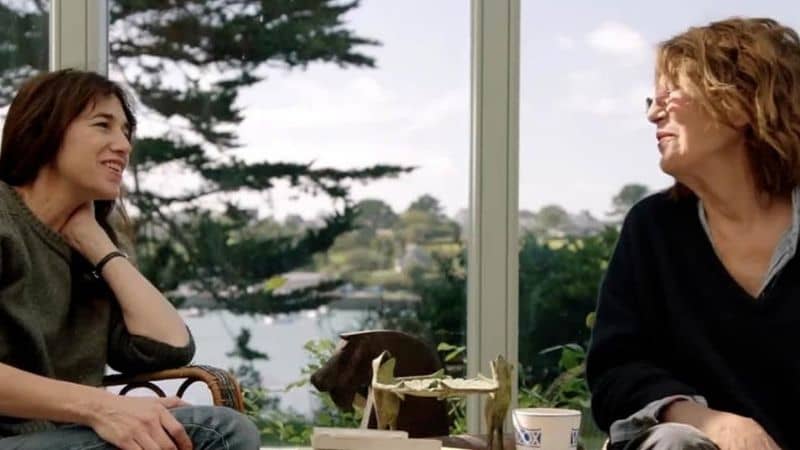
Mother can play different roles in this, and Cusp is very precise about that. The mothers of the featured teenagers cover the whole spectrum, from the supportive one, the daughter’s best friend, and is herself a victim of an abusive husband, to the one that took side with the predator and is now absent. Motherhood is one of the most idealised states in the Global North. Today and historically, very few mothers could afford themselves the luxury of expressing motherly love as depicted on the Madonna and the Child paintings. Among the rare films that challenge this myth are What’s Eating Gilbert Grape (Lasse Hallström, 1993), about 24-year old Gilbert (Johnny Depp), trying to take care of his mentally impaired younger brother Arnie (Leonardo DiCaprio) while their mother spends most of her days on the couch watching television and eating, and Nobody Knows (Hirokazu Kore-eda, 2004) about four children between five and twelve years old who are forced to survive on their own after their mother has abandoned them. Jane By Charlotte, a documentary portrait of #Jane Birkin# directed by her daughter #Charlotte Gainsbourg# is a much more subtle criticism of the myth of motherly love, revealing the efforts of those women who, in the midst of swinging sixties and revolutionary seventies, coped with the burden of motherhood the best they could and thus helped preserve the myth to this day.
Motherhood is one of the most idealised states in the Global North.
Daughters
Charlotte Gainsbourg, a daughter of Jane Birkin and #Serge Gainsbourg#, is best known as an actress. For her, too, this is a feature documentary debut, and she opened a novel perspective on the myths about female identity. Her first question to the famous mother, Why did you treat me differently than my sisters, is met with an even more odd response. Reports say that after this encounter, the shooting was blocked for some time, and one can sense that the rest of the filmed communication between daughter and mother was much less oddly immediate. But it is still more honest than these relationships usually are. Gainsbourg used almost no archive material, so the extraordinary beauty of young Jane Birkin remained a thing of the past. Simply filming her mother and their conversations about ordinary things such as dogs and sleeping habits, she created a loving portrait of a woman who, despite her social and cultural privileges, had to deal with the burden of contrasting identities alone. Birkin’s attempts to be a just mother to her three daughters might seem candidly naive. Consider that she already gave birth to a daughter and got divorced by 21. She got married to John Barry, who, at that time, was already married and had kids when she was 17 years old. A teenager.