At #Dokufest last week, a panel discussion posed this epic question: What does it mean to watch?
We are watching atrocities unfold on the news or #social media#, on screens and on our phones. Up until now, documentary has (mostly) not taken on the attributes of snuff films, but the footage we see in real life, in many ways, has. What does it mean when we click the «watch explicit content” button that otherwise hides something horrifying from us?
Do we want to look away but choose to keep watching? Or do we want to look away in despair, thinking we can’t do anything? What does it mean to watch this footage or these scenes? And what does it mean to film them, to be the watcher in real time as you capture the scene for others to view? Can anyone bear witness, and should they?
The panel proposed to «explore the ethics of watching and filming in a time when apathy often greets atrocity», although it didn’t totally unpack that complicated topic. But the panellists did address aspects of what it meant to watch and film.
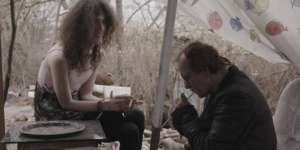
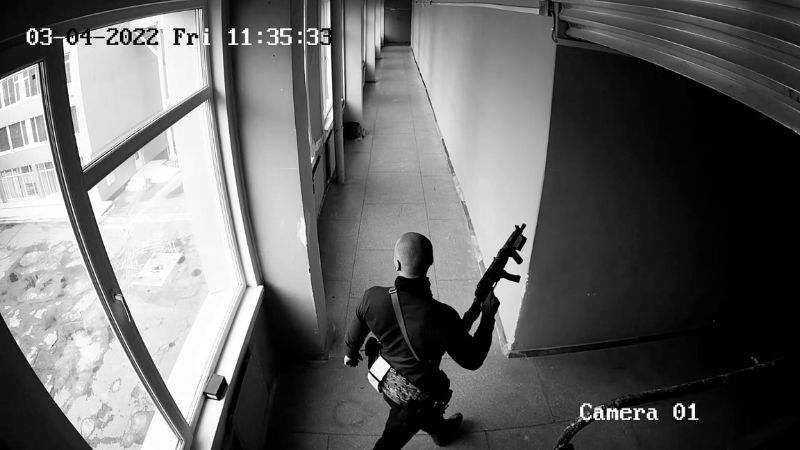
Lyuba Knorozok, Producer of Special Operation, addressed two of the panel’s questions – «How can the act of filming confront impunity?» and «Can attention lead to accountability?» – by making the case of film as evidence. The film is an edit of #surveillance footage from when Russian troops took over #Cherynobyl. The whole time of the occupation was recorded, and the workers risked their lives to preserve this footage. «We wanted to have evidence, not manipulated, to tell the story of the Russia invasion from the ‘inner side’,» she explained. «You watch the events with the eyes of the people in captivity, but they are watching those who captured them. So we’re questioning all the time, who’s watching who?»
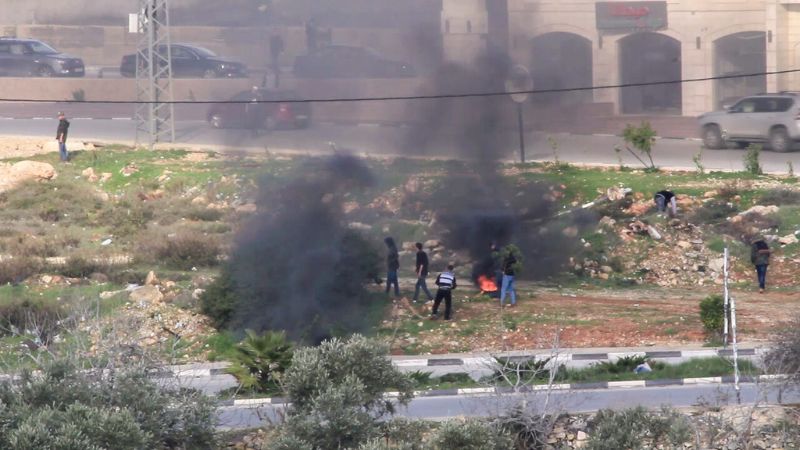
For Ramallah, Palestine, December 2018, Juliette Le Monnyer filmed 10 minutes out of her window in Ramallah, capturing one scene in the forever landscape of illegal Israeli occupation. «I was thinking framing something would help me get my bearings and understand what was happening in the scene and before my eyes,» Le Monnyer recounted.
Watching the film and hearing her talk, we can’t help but think about all the Palestinian journalists in #Gaza who bear witness to the atrocities, risking their lives (and being killed in the hundreds), precisely because Israel does not want people to understand what is happening. The camera is a tool for understanding and evidence in the face of injustice.
The camera «watching» the atrocities can also be a chance for justice, as documentation and documentaries are entered into evidence for war crimes. «Often, we imagine that justice is when somebody is going to jail or gets punished,» posed Knorozok. «But the saving of the history is also justice, and the memory is justice… [you have to] do the small steps to preserve the memory, to preserve the history, to preserve the story so that it won’t be forgotten and covered with other #propaganda. There is a real impact, even from the perspective of artistic documentary filmmaking.»
This last notion was echoed by filmmaker Peter Lom, co-director of The Coriolis Effect, a slow cinema work that turns its gaze to the animals and humans of #Cape Verde#, and their push to survive amidst the devastations of a changing #climate. He and co-director Corinne van Egeraat’s form of watching was to evoke feeling rather than evidence.
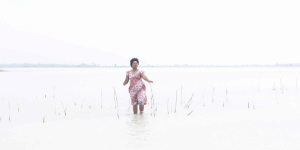
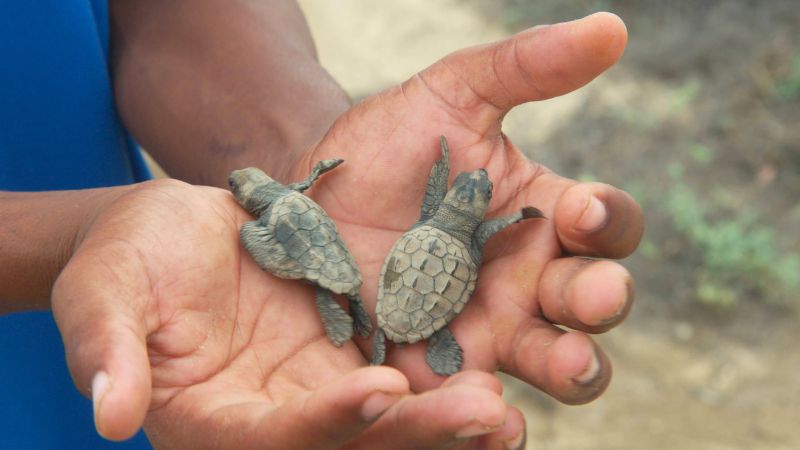
The film is almost too beautiful to feel the impact of devastation, but there are moments where the art of it hits deep – like a scene where a woman is walking to and from the sea collecting sand. The camera pulls back to see more women and men doing the same, and then further back and up, following the shoreline as you see pile after pile of sand – a usually illegal collecting operation to sell to construction companies that many are forced to do because the fishing industry has dried up. It’s an evocative visual that is deep with meaning. Or the camera focuses close in on the dried-up corpse of a massive turtle in the sandy landscape. Later, a young man explains the turtles die because they get too hot trying to find their way back to the sea, but the image of the turtle has already seared in our brain, evoking the reality of the devastation far deeper than the man’s words can be. Lom and van Egeraat’s extreme close-up shots of animals and nature really call us to see them as the living, breathing ecosystem equal to us.
Brett Story, the invited spotlight filmmaker, invites you to encounter something by looking away or in other ways to «see» that place or concept (for instance, the carceral system, in her film Prison in 12 Landscapes). It’s a way of watching without exploitation, watching without prescribing what you should be seeing.
«Seeing is not neutral and does not equal ‘activated’, even while so many social issue documentaries seem to be predicated on the idea that once we ‘see’ atrocity, we’ll be moved to resist it,» she explains. «In the case of prisons, I argue that ‘seeing’ people in cages does the opposite, often, of our intentions – it reifies the idea of certain kinds of mostly racialised and poor people being criminal, rather than ‘reveal’ them to be human or to be bearing undue violence.»
In other words, often times ‘seeing’ just reiterates – and normalises – the stereotypes.
In a time when we’re mostly watching by ourselves on our devices, does sitting in a theatre watching atrocities or rights abuses together conjure a commitment to seeing in a way that is larger than just ourselves?
The question may not be what it means to watch – we are all watching, we are looking, and we are seeing. The bigger question is: what do we do with what we see? Once these images are put into our care, should we be accountable to them? Maybe what is problematic about watching is that we are only voyeurs, directing our gaze for a while, before we turn it off and return to our «real world.»