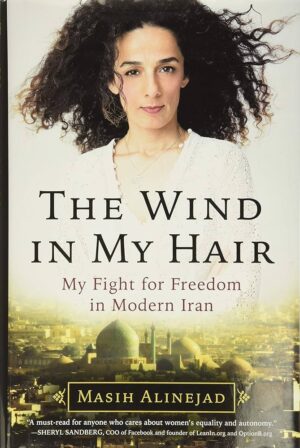
BOOK: The Wind in My Hair
AUTHOR: Masih Alinejad
PUBLISHER: Little, Brown and Company USA 2018
FILM: Be My Voice
DIRECTOR: Nahid Persson
PRODUCER: RealReel Doc AB
SE, US, IR, UK, NO
2021
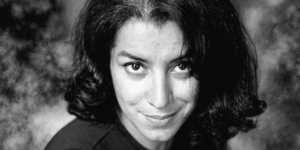
Masih Alinejad, a journalist and #human rights# activist known for sparking the Iranian movement against compulsory #hijab, is not an ordinary person. She was born Masoumeh Alinejad-Ghomikolayi in a village in northern #Iran a few years before Shah Mohammad Reza Pahlavi was superseded by the theocratic government of #Ayatollah Khomeini#. Her family supported the Islamic Revolution; her father was a member of the paramilitary organisation operating under the Islamic Revolutionary Guard Corps – she, on the contrary, is one of the most fervent opponents of the #Islamic Republic#. Living in New York and using #social media# for direct contact with the common people of Iran, she understands herself as the continuation of their voices. Boldly, in one of her recent TV interviews: «People Inside Iran are fed up with the Islamic Republic (…) And the Revolutionary Guard actually is a terrorist organisation (…).»
Fearless
As a teenager, Alinejad initiated a discussion group that published underground pamphlets demanding greater freedom in Iranian society. She was imprisoned for this and forever banned from finishing high school. She was a journalist for the local daily Hambastegi, a columnist for reformist daily Etemad Melli, and, during the sixth and seventh parliament, the correspondent from the parliament for the Iranian Labour News Agency (ILNA). She regularly contributes to the major global media in the Persian language, from the BBC Persian to the Voice of America, Radio Farda, and Manolo TV. She creates her own content for social media. Her series of podcasts about the victims of the crackdown of the protests that followed the 2009 elections, The Victims of 88, won the AIB Media Excellence Award in the category of Investigative Documentary/Radio in 2013, «an Oscar for international radio programs.» Her Facebook page, My Stealthy Freedom, where women in Iran, in protest against the compulsory hijab laws, post photos of themselves without scarves, sparked a nationwide protest movement. In 2022, Alinejad was nominated for the Nobel Peace Prize for her advocacy for women’s rights in Iran, and in 2023, Time magazine named her among its 12 Women of the Year.

Masih, the Messiah
She has been a victim of smear campaigns and a target of death threats, her family members in Iran have been arrested and harassed, but Alinejad can’t be intimidated. Her memoir, The Wind in My Hair (pub. Little, Brown and Company), covers her journey from a poor village in northern Iran to #Teheran, then to Oxford Brookes University, where she graduated in Communications Studies, to the house in Brooklyn, NY, where she lives now with her husband. The book is a fascinating read. It rarely happens that an author would have first-hand experience in such a broad range of social and political realms, from the provincial secret services and jails to the mechanisms of the national parliamentary and press politics, to diplomacy and personal encounters with leading Iranian politicians and historical personalities such as Iranian parliamentary speaker Haddad-Adel, reformist leader Karroubi, and the former presidents Rafsanjani, Khatami and Ahmadinejad.
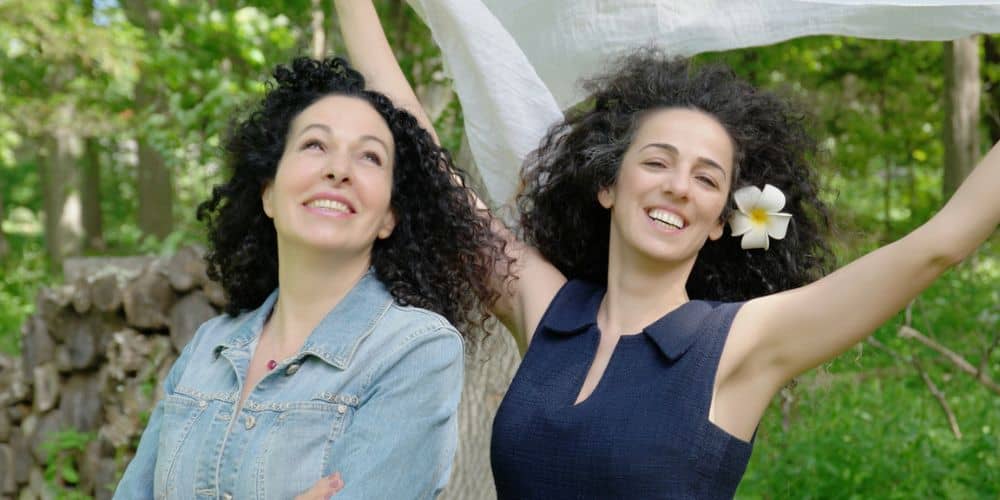
Her narration is fast-paced and straightforward, showing that honesty, no beating around the bush, is an essential part of Alinejad’s life and writing. Sharp contrasts stand out: between her strong curly hair and the fact that she, like her other female relatives, had to keep their hair covered even while sleeping. Between the scarf Alinejad was wearing as a journalist in Iran, and the white flower she dons in her crown of free-flowing curls today. The contrast between her frail constitution on the one hand, and on the other her immense love for life, her big heart, and her outstanding courage. The contrast between the international press and world #politics as her work ambiance, and the small village near the #Caspian Sea# where she was born. She frequently mentions this in her memoir, contributing her loud voice to her origins. But there is no doubt that she was a very special person, even as a child. As early as in high school, her colleagues changed her name from Masoumeh to «Masih,» Persian for «anointed» or «Messiah.»
It rarely happens that an author would have first-hand experience in such a broad range of social and political realms
Women’s rights, human rights
One of the first Alinejad’s memories is about the family toilet, located not in the main house but on the other side of the garden. During the night, going to the toilet was a frightening experience for all siblings. It was she who best managed to control her fear and had to accompany her older brother. So she proposed a deal to him – she would wake up and take him to the toilet, but in exchange, he would let her play with boys and ride the bicycle during the day. The agreement did not last long because «Iranian Revolutionaries consider women inferior to men.» While boys were allowed to run around and play the whole day, the girls had to stay at home, covered from head to toe. This injustice is at the very core of Alinejad’s activism.
In her book, she smoothly intertwines personal and private, demonstrating that it can’t be any different. Her work is her life because private is political. Her reconstruction of her fight for freedom includes her most intimate memories simply because they are part of it. She observes that her protests against evident human rights abuse, such as killing peaceful demonstrators, raised much less interest than her actions against compulsory hijab. Not by chance. One of the main objectives of the Iranian clerics, politicians, and those ordinary people who support the clerics is to keep women and all about them out of the #public sphere#. The hijab is the visible sign of this oppression that, of course, takes many forms.

The best of Social Media
The film Be My Voice by Nahid Persson complements and extends the book. It shows how Alinejad managed her life in #exile. In front of the house that is her home abroad, she planted flowers that create a sea of colours, herbs that smell like Iran, and trees that represent family members. She remained Alinejad from the book – speaking with a loud voice, singing on the streets, and dancing in the rain. She initiates and leads the acts of civil disobedience, using her freedom in exile to empower the quest for freedom in her home country. The director accompanies her in her daily tasks, and we get to see exactly how, on an hour-to-hour basis, Alinejad is managing social media campaigns, how she communicates with her followers, and even how she uses social media to directly monitor the response when she appears in mainstream media such as broadcast TV programs.
Alinejad’s achievement extends way beyond her home country. She managed to exploit the affordances of social media and their liberating potential in the best possible way. Traditional channels of communication and opinion makers, who once were the pillars of a democratic society, have lost their impact. Their modern counterparts, social media and so-called influencers, have dramatically limited the scope of public debate and mostly address their audiences as consumers. From this perspective, Alinejad almost did the impossible. In the best observational manner, the director enables the audience to see both what #Masih Alinejad# does and how she explains it. Thus, she reveals that mobilising millions of people and helping them have their say in making their lives better can’t be achieved easily. The affordances of social media make this possible, but equally important are basic human values: her honesty, solidarity, and courage. She is unique, but humanity needs more people like her.