What is it about this country – Turkey? For example, President #Recep Tayyip Erdoğan# and his administration can accuse the United Arab Emirates of financing the 2016 coup attempt in Istanbul, then establish good relations, call Syria’s #Bashar Assad# a murderer, then restore a top-level dialogue with him, referring to Egypt’s president as a murderer, then reappointing ambassadors to the country; or criticising Saudi Arabia for the murder of #Jamal Khashoggi#, then transferring the case to #Saudi Arabia# – after all, they offered lines of credit. Condemn #Israel for the atrocities in the #Gaza Strip – while many loyal businessmen in Erdoğan’s circle increase their profits and export volumes to Israel.
The new Turkey
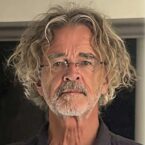
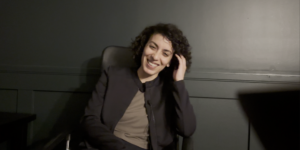
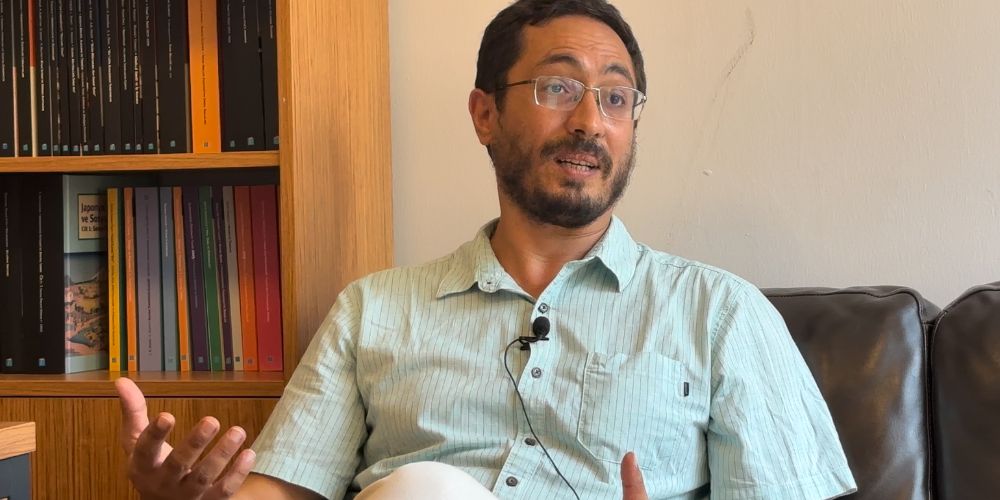
In Istanbul, I met the Turkish #Can Cemgil#, who, 20 years ago, completed a PhD in international relations at Sussex University in the UK. He now teaches this as well as international political economy, social theory and #Marxism at Bilgi University. He emphasises that everything is ‘with a Marxist perspective’, and I ask him how politically active he can really be in Turkey… He replies that he has been more or less active ever since his student days.
When it comes to today’s ‘new’ Turkey, he believes the regime is in a ‘reproduction crisis’: ‘When you put all this together, it becomes increasingly difficult to keep it going. There are multiple crises, such as economic problems, inflation and the housing situation for many here.’
I ask him to be more specific: ‘The government is raising interest rates. And the minimum wage has stood still for the past two years – previously it was increased twice a year. Through tax policy and by limiting wage increases, they are basically placing the entire burden on the working class. At the same time, the number of ultra-rich has increased very rapidly.’
Together with #Eren Duzgun#, Cemgil recently published the essay Class, State and Geopolitics: Explaining Erdoğan’s Turkey. Once hailed by the liberal international community as a role model in the region, Turkey has become an increasingly ‘unpredictable’ and ‘incomprehensible’ actor over the past decade with the AKP (Adalet ve Kalkınma Partisi, or Justice and Development Party) in power. For example, Turkey has fought US-backed Kurdish forces in Syria and kept Sweden at the gateway to NATO while actively participating in several #NATO missions and selling armed drones to Ukraine for use against the Russian invasion. It has kept the Bosphorus Strait closed to Russian military vessels while protesting the US and NATO presence in the Black Sea and buying S-400 missile systems from Russia, all with the intention of acting as a peace broker in the Ukrainian conflict.
According to Cemgil: ‘If you ask President Erdoğan and the people around him, there’s nothing surprising in this, because this is exactly what the ‘new Turkey’, as they like to call it, is all about. Geopolitically, the new Turkey is both a staunch NATO ally and an independent regional player fighting Western imperialism. Politically, it is an electoral democracy, albeit with Turkish characteristics. But for many critical commentators, whatever Erdoğan himself chooses to believe, Turkey is now a textbook example of nationalist authoritarianism, economic irrationality and geopolitical aggression.’
‘Turkey stands as a textbook example of nationalist authoritarianism, economic irrationality and geopolitical aggression.’
President Erdoğan and Gezi Park
President Erdoğan has been in power for two decades now. His policies were different before 2013, according to Cemgil: ‘People were positive about him when the AKP and all his political campaigns somehow managed to pacify large parts of the population – by basically being accommodating to everyone. For example, he was in favour of #LGBT marriage at the time. Now, he is strongly against it. He was very open to all kinds of lifestyle choices. He was weaker and needed the support of the population since the institutions were almost completely against him – the judiciary, the military and the bureaucracy, what we can call the establishment, and the Turkish state. So he got a lot of support from liberals, including left-liberals and also pro-Kurdish groups. He challenged the fossilised structures of the Turkish state. Such policies made life easier for many and gave them some hope for the future.’
The shift came with the Gezi Park protests in May 2013. By then, Erdoğan’s party had managed to fill the bureaucracy, the judiciary and the military with its own allies. And, according to Cemgil, things were going relatively well in the economy, where interest rates were historically low: ‘The Turkish lira was very solid. And credit lines were open. People could access easy and cheap credit. There was an abundance of credit, including international credit. But at the end of May 2013, two things happened. The Federal Reserve started to tighten the market, and then the events in Gezi Park happened.’
When the protests broke out, people realised a lot, according to Cemgil: ‘Erdoğan was authoritarian at heart. He just wanted to gather enough strength to consolidate his position and the Turkish state.’ People realised how authoritarian the state could be: ‘I remember saying to myself and my friends: ‘These people don’t know what the state can do to them. That’s why they are so brave when they march against the police and break the police barricades.’ But then they met the real face of the state. That’s when things started to go downhill.’
What about the attempted coup d’état in 2016, I ask – as we remember the soldiers on the bridge in #Istanbul, where parts of the military tried to overthrow Erdoğan (see also the Norwegian documentary film En gave fra Gud, 2019). Cemgil explains: ‘Erdoğan used this to his advantage and let it all happen under controlled circumstances. He then attacked a number of military, political and civilian critics.’ Some might have thought that Erdoğan himself had a hand in this game: ‘They knew that a coup was going to take place. He just wanted to understand the full extent of it so that he could eliminate elements – former allies and members of the formal establishment. He found a way to fight back. High-ranking military officers were retired when he no longer needed them.’
He challenged the fossilised structures of the Turkish state.
Freedom of speech
We change the subject to freedom of speech in Turkey. How are critical voices silenced, and does this only happen to a few radicals? Cemgil says he is sometimes surprised to see less radical people being silenced: ‘When I hear stories about my colleagues or journalists being interrogated, imprisoned or put on trial because of freedom of expression issues, I can think that this person is not that radical. They’re doing this not just to silence them or deter them but to cut the line between their critics and the wider public.’
So, are individuals being targeted, or is the suppression of freedom of expression more systematically structural? I wonder in our conversation: ‘Of course, the authorities put a lot of effort into controlling the whole narrative. So they’ve bought up almost all the major established media. There’s some opposition, but they’re all aligned with the government when it’s a so-called national security issue or something.
national security issue or something.’
He explains that the situation for intellectuals is very bad, and not just the immediate risk of being imprisoned or silenced by the authorities, but the ‘chilling effect’ – where you start censoring yourself: ‘They imprison key people, such as academics for peace. They find ways to keep them in jail; some are dismissed from their jobs or have their passports confiscated. But all this is actually illegal. Yet the authorities use such strategies to make life difficult for them.’
In a decision from the European Court of Human Rights, it was said that by combining all these practices, the state is essentially condemning these people to civil death – where, by being subjected to such persecution, you lose your social relations as a citizen. ‘If you are allowed to go back to work after ten years via a court, this is too long a time in a human life. Life has changed.’
But many alternative magazines and newspapers are trying their hand at online publishing – they are critical of a state that controls the established media.
Cemgil is one of the founders of the Turkish Freedom of Expression Association, which helps media that are blocked by the state. According to him, thousands of websites are blocked in Turkey every year: ‘This is an unnecessary financial and labour burden. They are silencing them without necessarily shutting them down. Basically, the Constitutional Court has to rule on violations of freedom of expression in all cases brought before the court. This is where we contribute with our legal work. We have well-established legal researchers in the association.’
I mention the group behind P24, which I will visit the next day: ‘It’s an online medium, one of the few relatively large ones. They’ve been there for a while and are doing alternative media work.’
Capital, women and Kurds
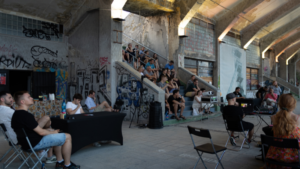
At the same time, NY TID was invited to the conference The Changing World Economy and Today’s Imperialism, organised by IIPPE (International Initiative for Promoting Political Economy) at Bilgi University in Istanbul in September. Here, Cemgil gave the lecture The Geopolitical Economy of Turkey’s Militarisation and the Poly-Crisis of the Global Order. NY TID also participated in a panel where we discussed Gaza’s situation in front of an audience of 60 people, as well as an opportunity to show an upcoming film about Palestine. Other themes during the conference included lectures such as The Rise of China and Its Implications to the World; Generative AI and teaching pluralist economics; and States and/vs Markets in Capitalism. But also financialisation processes, investing in the green transition, extraordinary monetary policy and today’s austerity ideology. Or how about a title like Why do states encourage and facilitate cryptocurrency mining on their territory?
Back to Cemgil, I ask him here in his office – what about feminist rights? ‘I’m not the right person to talk about it, but everyone can see that it’s not going so well. Women have struggled a lot. When it came to the Istanbul Convention (Council of Europe Convention on Preventing and Combating Violence against Women and Domestic Violence – 2018), Turkey left a convention named after the country’s largest city – because they needed the support of some radical religious political parties. Erdoğan had to do it to stay in power.
One thing that Cemgil and Eren Duzgun mention in the aforementioned essay is the #Kurdish problem and a possible peace process. Does he envisage new opportunities? ‘It is absolutely impossible for this regime today to make peace with the Kurds. But the answer is more complicated because Erdoğan is a very pragmatic political figure. He was allied with the US, then with #Russia. He does what keeps him in power. But the conditions for peace to be possible are that he basically dissolves his current coalition since 2015 with the ultra-nationalist support of the Nationalist Action Party. The AKP’s small coalition partner has links to many criminal organisations, #drugs, gangs and the #mafia. Erdoğan is unhappy about this but can’t do anything about it. And without them, he can’t stay in power. But if he has problems with his current coalition partner and needs the support of the Kurds again, it’s possible.’
I bring up the language, which is denied to the Kurds, just as a Kurdish teacher in a Kurdish region has to teach in Turkish to the Kurdish students. Absurd? ‘The early AKP made some reforms in this area, at least introducing Kurdish as an optional language course. Before that, it wasn’t fully recognised.’
Big politics
According to Cemgil, who calls Turkey ‘a geopolitical tenant’, its geopolitical position in the #Middle East# has pitted great powers against each other for over two centuries: ‘Turkey in the 19th century was not a viable state. It should have collapsed a long time ago, but it was able to stay afloat by playing great powers against each other. Like France in one case, against Russia, then another case with France and Britain against Russia, or with Russia against the governor of Egypt. It was called the ‘Eastern Question’ at the time – a question of who benefits. For example, when Turkey, which was supposed to be a staunch ally of NATO in the 1970s, invaded #Cyprus, the US imposed an embargo on Turkey. The Soviet Union then gave huge amounts of money to Turkey, provided a lot of expertise, installed factories – and Turkey, an anti-communist bulwark, then accepted all this. Turkey could easily switch sides for pragmatic reasons.’
And what about the new BRICS cooperation? I ask: ‘Turkey doesn’t want to become a full-fledged #BRICS country but wants to balance the Western allies by showing that it has an alternative.’
‘İmamoğlu is the secular version – he’s not as authoritarian as Erdoğan.’
‘A political animal’
In our conversation, Cemgil describes Erdoğan as ‘a political animal’. His policies may seem incoherent and irrational, but they have an underlying logic. Erdoğan knows what he’s doing, even though some may seem stupid and irrational. The interesting thing is that such a leader, who has a way of talking to the population, usually convinces his voters that what they did was right at the time. One example was the relationship with the Kurds, according to Cemgil: ‘He convinced 80 per cent of the population that the peace process was necessary – in 2013. Today, 80 per cent of the population believes that those who participated in the negotiations are terrorists. Here, you can see that over 60 million people have moved from one extreme to another. That means you are a very smart, political and pragmatic politician.’
I end the conversation by asking about the future, as opposition politician #Ekrem İmamoğlu# – Istanbul’s mayor – is a prominent presidential candidate for change in the 2028 elections: ‘He has a way of talking to people. People listen to him, even the extremely conservative ones. And it’s all about prosperity and welfare, not exactly about religion and tradition, as many believe. İmamoğlu is the secular version – he’s not as authoritarian as Erdoğan.’
I throw out an idea to Cemgil – what if he was in the leadership role, what would he do with politics? ‘Well, I would start with the immediate problems like the housing crisis and the latest round of orthodox economic policies applauded by the IMF, the World Bank and the Western financial institutions – which have destroyed the working class. I would also start with the whole tax policy. And, of course, full freedom of speech. In addition, I would have restored and reformed the democratic institutions…’
The interviews – and a short film featuring them – are financially supported by Fritt Ord. The film is available at https://vimeo.com/1032275137
See also our interview with Mustafa Ünlü,
and a separate article on Turkey’s militarisation.