
You are now one of the around 20 000 people who will have this European documentary magazine in their hands. Our independent journalism is written by more than ten regular doc critics from all over Europe. Modern Times Review (MTR) is now in its fourth year, planning to be a quarterly magazine. And we are doing podcasts – so maybe you will meet me around with a microphone…(See our article on DIY Podcast on page 36).
This spring issue is handed out to professionals at six key doc festivals in Europe. From thousands of docs sent to festivals, festivals carefully do their selections: Some are looking for the «auteur» aspect (#Majordocs), others for ecological ones (#One World#), or Human Rights oriented films (#Human), as one of several selection criteria. Or could it be the dispotif (#Cinéma du réel#), something with structure? As you can read in our interviews, festival futures are discussed: With increasing online activity, one tells how important it is to keep up «meeting places» to discuss films. My guess is that in the future several festivals will follow Human in Oslo’s lead, which has expanded the concept of doc festival into documentary theatre, art exhibition, and a lot of in-depth debates connected (or not connected) to doc films.
And here in MTR we too extend the D-word into documentary photos, books, and interactive projects as you can see on several pages in this issue.
We are living in the ongoing metaphysics of the western military-industrial complex, with consumerism and competition as ongoing aims.
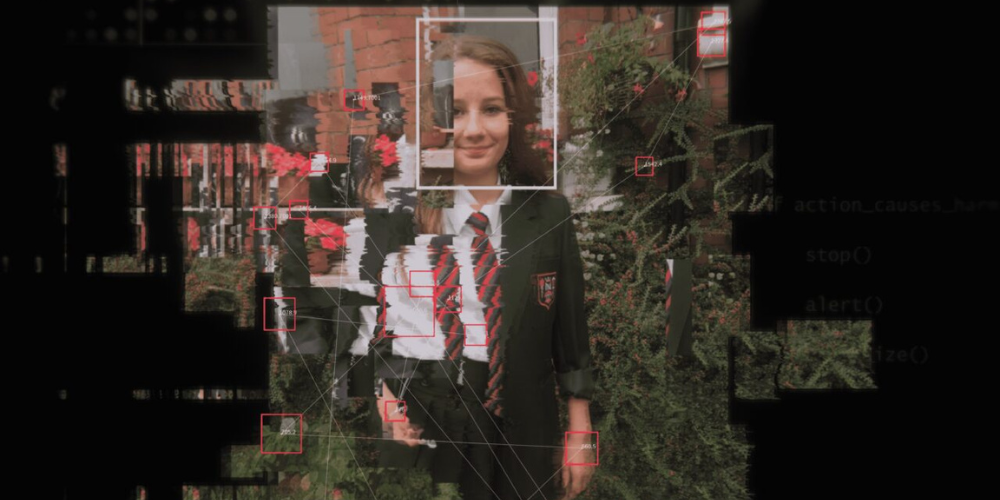
Unfortunately, mass media have become more and more ridden by populism and easily digested trivial articles blurred by the streams of social media. Luckily, a lot of doc directors have taken on the role of investigative journalists with years of work voluntarily invested – combined with visual style. One great example is Caught in the Net which shows a social media setup, where 2500 sexually single-minded men quickly showed up at screens to chat with who they think are 12-year old vulnerable girls – apparently curious to talk to someone through social media. Statistics shows that there are many young girls out there chatting, who can be exposed to this – as the film tells. The four paid female actors are actually 19 years old – and we also see them meet some of these men at cafes, where directors Klusák & Chalupová and their crew film the men’s offences through hidden cameras. Blackmailing etc is a criminal offence, and the Czech police got all the material to follow up with charges.
«Minority»
Our editorial line here at MTR is more social-political than personal-private. As an alternative to today’s me-me-me social media culture and overload of «news», we believe the in-depth critical review is relevant. But the personal can still be political, as we can see a person’s fight for justice, combining personal courage with political matters – like the doc Scars (page 23).
In MTR you will continue to read doc reviews on #conflicts/#militarism; #surveillance, new-tech, and financialisaton in today’s #control societies; and reviews on #ecological and #philosophical-#existential films. We think our readers are in this «minority» of humans who want to know, who cares for individual freedom, humans that identify with an international solidarity – and, at least, minimum standards to live by. As a social-liberal or eco-anarchistic worldview? Maybe.
As you can see in several articles in our issues, we care about modern times, about the coming decades of big tech (page 32), futurism/hyperintelligence (page 43), and artificial intelligence (page 16–17). We also care about the «eco-grief», expressed by #Extinction Rebellion# (page 14–15). Our «minority» care about where we humans are going, and what our legacy will be. Life is short – as we know.
Festivals
The hundreds of festival docs this spring gives us a lot of stories and visuals to reflect on. But how do we interpret reality? As humans, we have «dispotifs» as #Michel Foucault# once talked about, or as another philosopher before him, #Martin Heidegger#, called ways of being – our possibilities, or how we interpret life. Meaning much more than the «glasses» we look trough. In this way, we can also say that authoritarian regimes has already laid out ways of being for the majority of its citizens.
Some keywords from this issue can give a clue: The henchmen of Kadyrov in #Chechnya, polluted and toxic environment, qualitative or artificial needs, tormented souls, ecological imprint, beauty in pain, regimes of despots, colonization, image overflow, urban escape, Putin and his cronies, risking lives, futurism, indigenous people, surveillance mentality, lost children, anorexia, etc.
Destitution
We are living in the ongoing metaphysics of the western military-industrial complex, with #consumerism and #competition as ongoing aims. A race to the bottom exploiting the planet – also with nations against nations (or #refugees), company against company, person against person…
Maybe we should listen more to the new movements of «destitution», a way of being that makes the powers that be lose their grip on you. A kind of de-powering – and not repowering to the same. Why not a de-powering of «enemy images» sold by governments, the mass media, and the fiction film industry?
Are we the minority of open-minded, accepting, and living with the Other – the person with a different religion, different skin, different values? I guess so. So how can we de-power how #African-Americans# are treated in the US or how #Muslims are treated in India? How can we with European values de-power how #China «owns» their citizens by extended surveillance or how they treat their #Uyghurs? Or help #Russia to see freedom of speech as fruitful?
Two docs in this issue show withdrawal from power. A shepherd’s life (page 27), or a Norwegian seeking the jungle life (page 38–39). This sounds great – but the coin has two sides…
Anyway, welcome to the ’20s!