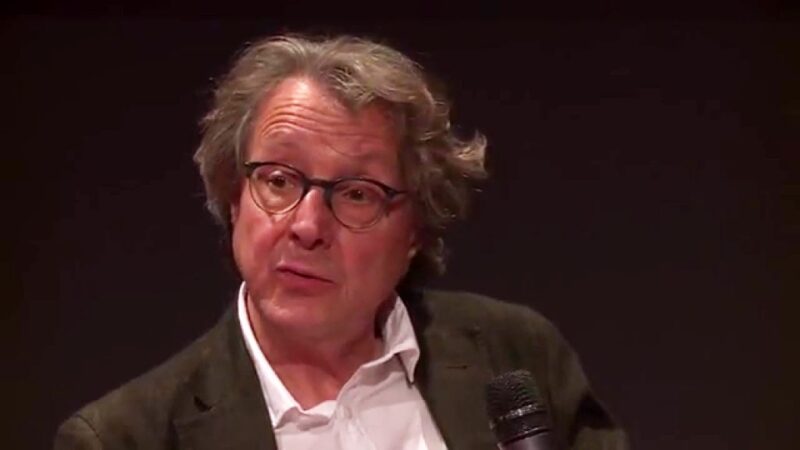
For a while, everyone interested in African politics has heard of Jean François Bayart. When the French political scientist published an English version of his L’État en Afrique (1989) – The State in Africa – in 1993, it quickly became a classic. Anyone studying anything related to politics in any African country read Bayart, even though his empirical evidence was mainly drawn from his doctoral thesis on the state in #Cameroon from 1979. Back then, he was a 29-year-old unknown French political scientist; now, at 67, he can look back on a long career as a researcher, lecturer, and author. Today, he still holds research positions in Rabat, Paris, and Geneva.
Bayart has worked in several African countries but has been more focused on the #Maghreb (North Africa west of the Nile and north of the Sahara), the #Middle East#, and #Europe in recent years than on #Africa south of the #Sahara. He is still concerned with the state and its role and identity under the influence of globalisation.
Illegitimate debt
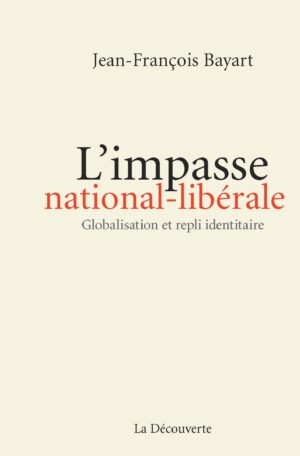
In L’impasse nationale-libérale, Bayart demonstrates that he can analyse not only the African state with certainty (critics would say overconfidence). With great confidence, Bayart refers to more or less known historical events in #Asia, Africa, and Europe to explain the backgrounds of state ideologies and identities today. In the first part of the book, he devotes much space to France’s #warfare and intervention, «doomed to fail» (perdues d’avances), as he puts it, in #Afghanistan, #Iraq, #Libya, and in the #Sahel (Mali, Niger, Chad). He explains why French foreign policy for the past 40 years – at least – has contributed significantly to state crises, Islamist uprisings, and separatist movements. France burdened the countries in the Sahel region with illegitimate debt in the 1970s by lending large amounts to dictatorial leaders, for which the population was responsible for repayment. When they failed to do so, France (and the West) imposed economic liberalisation and cuts in public spending on the countries in the 1980s. This resulted in even fewer opportunities for the poor, reduced #healthcare, and cuts in wages and #education. At the same time, the elite profited from #privatisation by investing in infrastructure and state-owned companies.
French foreign policy for the past 40 years – at least – has contributed significantly to state crises, Islamist uprisings, and separatist movements.
Not for everyone
This further marginalisation led to more poor people in the Sahel countries wanting to emigrate to France. But then, Europe established the #Schengen cooperation and closed its borders in 1990. People from the Sahel region felt that globalisation’s free flow did not apply to them. Aid volumes decreased, while fewer people could migrate and send money home. France’s policies exacerbated the crisis. The country took the lead in bombing #Gaddafi in February 2011 – something that, according to Bayart, makes it impossible to understand the logic of French foreign policy. He names the prominent philosopher Bernard-Henri Lévy as then-President Sarkozy’s useful idiot in legitimising the intervention in Libya while speculating whether the real reason was that #Sarkozy had received financial support from Gaddafi during the presidential campaign. In my opinion, such conspiracy theories weaken the book’s seriousness as a polemical contribution to French foreign policy.
Insider knowledge
The fact that Bayart speaks just as familiarly about #Erdogan and #Macron as he does about «Reza Zarrab» and «Ali Akbar Hachemi Rasandjani» allows for two ways of reading the book: either to truly study it, find out who these individuals are, google historical events and figures, consult world history, and continue reading Bayart’s book. Alternatively, skim through these parts and try to grasp the central message – which the book certainly has: It is a 230-page personal, polemical, and political essay where Bayart aims to change the French discourse on the state, the nation, and globalisation. In line with Fernand Braudel’s longue durée – analysing history with the understanding that events, structures, and ideas change at different rates – Bayart pours out his viewpoints on the world today based on hundreds of years in the past.
Although Bayart is a self-proclaimed member of the intellectual elite in France, one can be provoked by his confident style. The lack of footnotes and bombastic statements about how others portray the world incorrectly at times border on irritation. However, Bayart’s message is still interesting – as evidenced by his numerous media appearances, reviews, and interviews in French newspapers and magazines since the book’s release in March this year.
While the rich move freely and benefit from liberalised trade barriers, the poor are neither allowed to move
State for the elite
Bayart’s central idea is that globalisation and the development of national identity are complementary processes that reinforce each other rather than, as many believe, processes moving in opposite directions. The world is globalised for the wealthy elite, while for the masses, it is characterised by increased #nationalism, he argues: While the rich move freely and benefit from liberalised trade barriers, the poor are neither allowed to move (visa restrictions) nor have the means to take advantage of cheap goods from other parts of the world (which are still too expensive).
The poor remain the losers of globalisation, as seen in illegal migration, #slave wages, and #unemployment. The world’s elites understand the situation and fear the consequences if the less privileged were also to share in the benefits of globalisation. That is why the wealthy countries shut them out of the community and protect their borders and privileges even more diligently than before. This is where the nation-state comes in: The state becomes a strong protector of a national identity that the masses can identify with while negotiating better global conditions for the nation-state’s elite citizens. According to Bayart, this policy has led the world into the catastrophe we can now glimpse the outlines of.