It’s perplexing. Who thought pairing the premieres of the films Oppenheimer with Barbie would be a good idea? Ultraviolence (I am become the God of Death — Bim-Bam-Boom!) and Ultrasex (in the guise of some toy’s anatomical incorrectness being solved by Margot Robbie’s Babylonian generosities). Do we need another sign that it’s over for human #civilisation? That the twin allures of Das Kapital have finally found a way to make us munch popcorn and weep at Oppie’s loss of national security status because he once had pinko ties, and that Robbie has bravely taken pink Barbie out of anorexia nervosa and hangs out with the horns of plenty now. Why no GI Joe, sporting a new 3D printer dick, included in the flick for Margot to bivouac with?
That’s the mainstream for you. They’ve totally bought into the America yin-and-yang, #sex and death, just as #Freud feared in Civilization and Discontents. Popcorning to a nuke movie. How about that! We just can’t take anything seriously any more, can we?
Pssst. What? Not anatomically corrected? Then why would you go to that movie? Is it a nod of homage to the non-binary orientalists? Is it some #AI inside joke? A fist-up stand of solidarity for poor old #Alan Turing# and the #Singularity ahead? Or is it just omnipotence versus impotence? What a double bill.
A story already told
Naturally, what’s left of the Left has been wringing their hands and playing old Dylan tunes again in disgust at how wrong #Hollywood got it. Oppenheimer should represent an important ‘teaching moment,’ as they say, for those of us who tend to forget and look at Jewish friends with bewilderment when they say, «Never again.» Whaddya mean, Isaac? We go. And they schlep off, muttering at the wall.
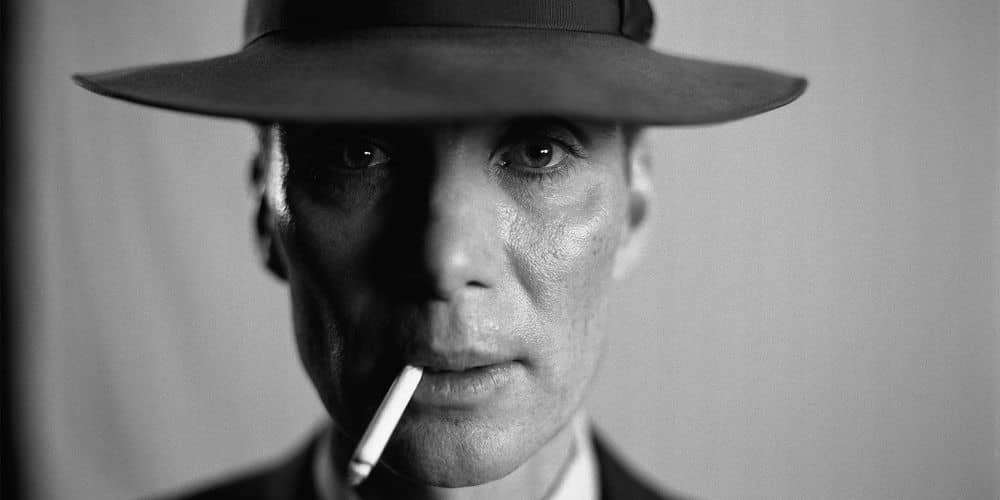
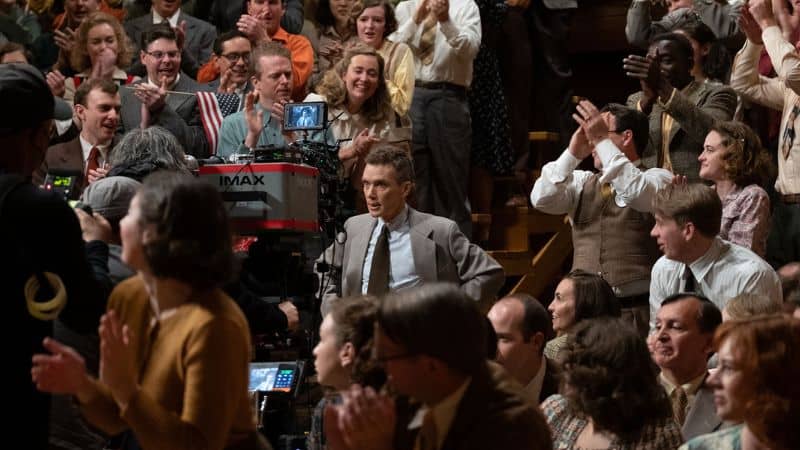
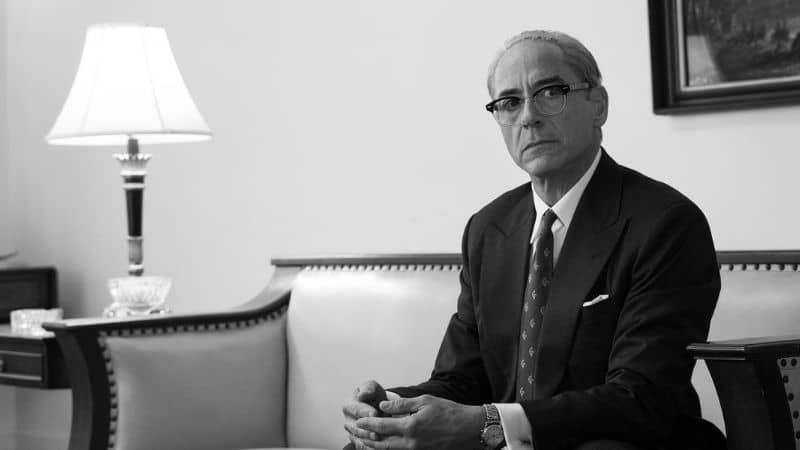
I watched Oppenheimer yesterday. The story has been told a number of times now. This particular version is based upon the 2006 Pulitzer Prize-winning biography American Prometheus by Kai Bird and Martin Sherwin. It stars Cillian Murphy as J. Robert Oppenheimer; Emily Blunt as Kitty Oppenheimer; Florence Pugh as Jean Tatlock; Matt Damon as General Leslie Groves; Robert Downey as Lewis Strauss; Tom Conti as Albert Einstein; Kenneth Branaugh as Niels Bohr; Jason Clarke as Roger Robb; and, Matthias Schweighöfer as Werner Heisenberger. It’s a stellar cast for the blast from the past (although it would have benefitted from casting David Byrne as Oppenheimer and the late great Philip Seymour Hoffman as General Grove). It’s an epic biographical thriller, but it’s too vanilla, and I feel that all that hellfire and angst(roms) should have broken my heart in twain for the last time. But, as Peggy Lee once sang, «Is That All There It Is?»
We just can’t take anything seriously any more, can we?
Oppenheimer follows the Bird/Sherwin delineation and begins at the end of his career. In December 1953, the Atomic Energy Commission suspended Oppenheimer’s security clearance and a few weeks later revoked it, fearing that, although he could be regarded as a loyal American citizen, his past affiliations with #communists, as well as his post-Hiroshima speeches regarding the need to control nuclear proliferation through #UN measures, roiled rightwing militarists and political fascists, such as Senator #Joseph McCarthy# — and president #Harry Truman#, who referred to him as a «crybaby.» Their decision was influenced by an #FBI report that stated that «more probably than not, J. Robert Oppenheimer is an agent of the Soviet Union.» The three-hour film attempts to honour Oppie’s request to weigh his existential being in the totality of his life rather than with reactionary jibes and jingoism.
The AEC move meant Oppenheimer could not work or know about future nuclear weapons projects. Still, more importantly, the widely publicised rebuke to his legacy as the Father of the Atomic Bomb left his name blackened and his mood blue. The full frontal assault was led by Washington lawyer Roger Robb, known for his «ferocious cross-examination» technique, and played typecastically by Jason Clarke, who had us believin’ in torture from his role in Zero Dark Thirty. As the authors of American Prometheus put it:
In assaulting his politics and his professional judgments—his life and his values really—Oppenheimer’s critics in 1954 exposed many aspects of his character: his ambitions and insecurities, his brilliance and naïveté, his determination and fearfulness, his stoicism and his bewilderment.
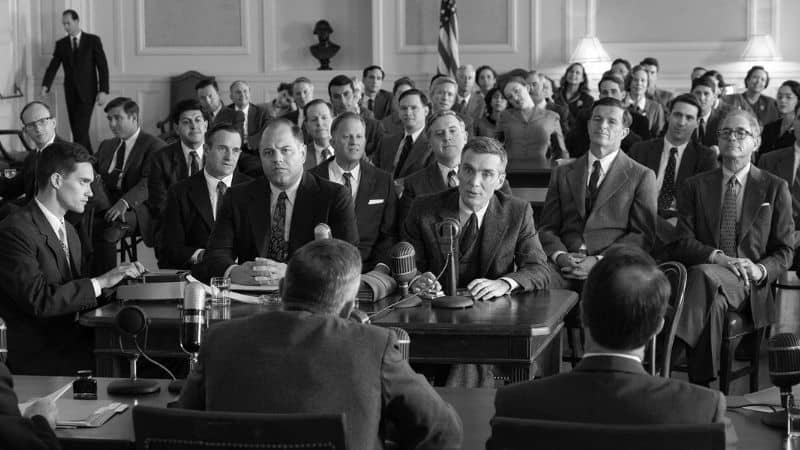
Contradictions, serenity, literacy
This deeply contradictory and, yet, serene and highly literate Oppie is what director Christopher Nolan tries to capture in the film. Recently, Cillian Murphy summed up Oppie and how he approached the role of playing the enigma, whose rationale for continuing to develop the Bomb was the counter-intuitive notion that it would make war obsolete: «I do think that he believed it would be the weapon to end all wars», Murphy recently told NME. «He thought that [having the bomb] would motivate countries to form a sort of #nuclear world governance. He was naive.» Indeed, the United Nations has proven futile in stopping the dominators among nation-states. In the film, in a scene just following the successful explosion of the atom bomb (that’ll end all war), Oppie is talking with Edward Teller when the former says he hopes the message sent is that ‘all war is now unthinkable.’ Still, Teller immediately responds that, yes, maybe, ‘until a bigger bomb comes along’.
Unfortunately, for my enjoyment of the movie, I’d read other accounts of the relationship between Teller and Oppenheimer. Daniel Ellsberg, for instance, wrote in his last book before he died, The Doomsday Machine: Confessions of a Nuclear War Planner — the book he says he wished he’d been able to get out before the #Pentagon Papers# — that when he came out of seeing Dr Strangelove with a buddy, they were convinced they’d just watched «a documentary», and that Peter Sellers’s Strangelove was like the real-life Edward Teller, who wore, uncomfortably, the Glove that Vice President #Dick Cheney# would find the need to take off, but who was entirely self-satisfied with in the end. We got very little of this tension, or frisson, if you will, in the film. Director Nolan goes with «naive», thereby painting all lefty rhetoric since the Double-Tap on #Japan as ignorance of realpolitik.
Oppenheimer fails on another front miserably and, now, loudly. Nolan chose to enact the famous Oppie quote from the #Bhagavad-Gita in a way that the writers of American Prometheus probably would have found misleading, let’s say, and which some Hindus were said to be deeply offended by. The quote we have heard over and over from Oppie-mism is: «I am become Death, Destroyer of worlds.» Nice sound byte. But it is a quote from The Song of God, which, in American Prometheus, Oppenheimer describes as «the most beautiful philosophical song existing in any known tongue.» But, in Nolan’s film, while screwing his then-girlfriend, an aspiring psychiatrist, Jean Tatlock forces him to read (in translation) the stanza embedding the quote directly while she rides him to heaven like Belle Starr, and he constellates her firmament with, um, stars. (The actual BG Sanskrit can be wonderfully listened to here.) Hmph.
Nolan might have explored Oppenheimer’s deeper inner mythopoesis not only by more fully contextualising «the most beautiful philosophical song” and showing how it applies to the problem at hand. He was also digging into John Donne. I’ve been there, done that; I understand how that can happen. Oppie was drawn to the Holy Sonnets, to the Trinity (he named his Bomb project after it), and, in particular, the «Batter My Heart» one, which I just love to death. It goes on about the hopelessness of being a sinner and the need to be ravished and bodily owned by the Lord; in short, it advocates consensual moral rape. Nolan’s having none of that. In American Prometheus, we find out that Oppenheimer had read TS Eliot’s The Wasteland, too. And while Oppie is shown briefly reading it in the film, it gets no further fob; it’s just a gesture to the more literate in the cinema crowd, who might go, dig it, man. Hell, the authors of America Prometheus even describe how Eliot came to #Princeton on a short-term fellowship at Oppie’s behest, during which he wrote The Cocktail Party («the worst thing he ever wrote,” opines Oppie, in the book) and avoided such faculty parties while at Princeton. Nope. Too highbrow to explore. Welcome to messy #Democracy and its Discontents.
Director Nolan goes with «naive», thereby painting all lefty rhetoric since the Double-Tap on Japan as ignorance of realpolitik.
Preceding Oppenheimer’s release by just a couple of weeks was another Oppenheimer film (documentary) that appeared on #NBC, To End All War: Oppenheimer & the Atomic Bomb. The #PBS Ken Burns-ish feel doesn’t have the manipulative soundtrack, or the wonder-filled moment at how They pulled off that Bomb explosion on film without CGI, or the titty sexual romps of Oppie riding two women (tragic as a molecule fissioning), or the play to the plebs for entertainment rather than factuality. But To End All War does have a nice compact story that unfurls over a mere 83 minutes. And everybody plays themselves. And I would recommend that shorter doco over the epic tragedy of the Left’s demise.
Now I’ve just read that Oppenheimer star Cillian Murphy has announced his willingness to be a Ken in the next Barbie movie. More Big Bang for the Buck. Ee-haaa!