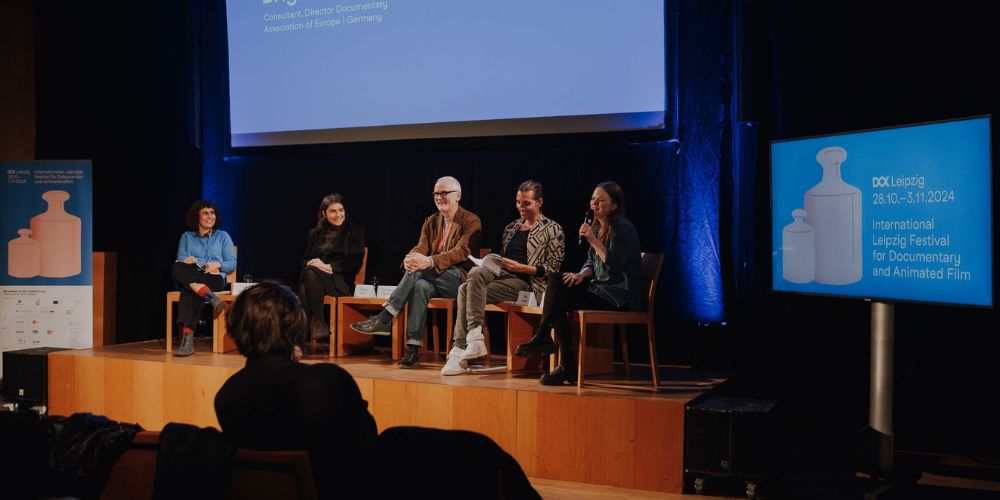
DOK Leipzig organised a debate in different panels about the connections and interferences between documentary and fictional works.
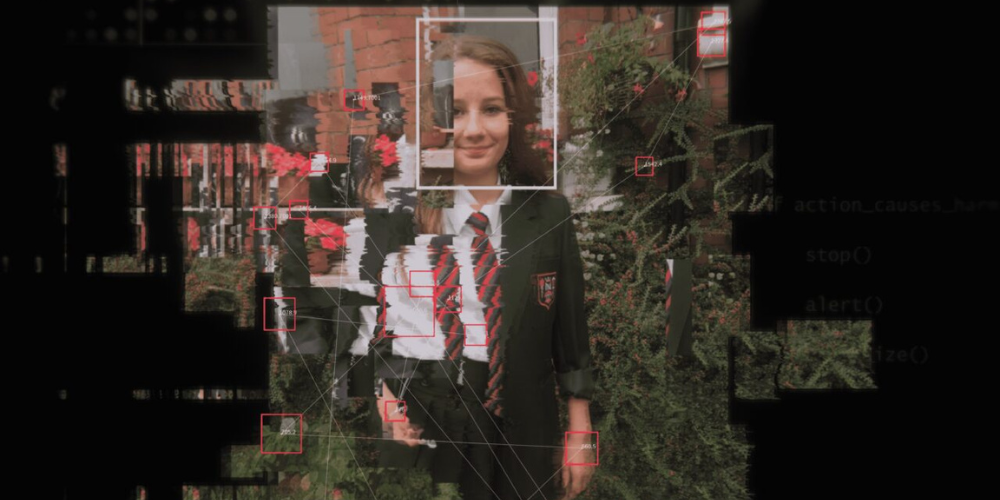
The first part was a presentation of the working conditions of some of the documentary filmmakers. It may come as a surprise to the general public that the actual process of documentaries can take a strongly controlled form. It starts with choosing a subject, like The consequences, challenges, or problems of people charged with debt or research about digital wars, pointing out the example of the attack on a nuclear centre in Iraq. After having defined the subject for months or more, different perspectives will be developed; from there on, protagonists should be found, those who are representing and incarnating these aspects. In the research process for these protagonists, other criteria will also be considered, such as the possibility of public identification or at least sympathy for these figures.
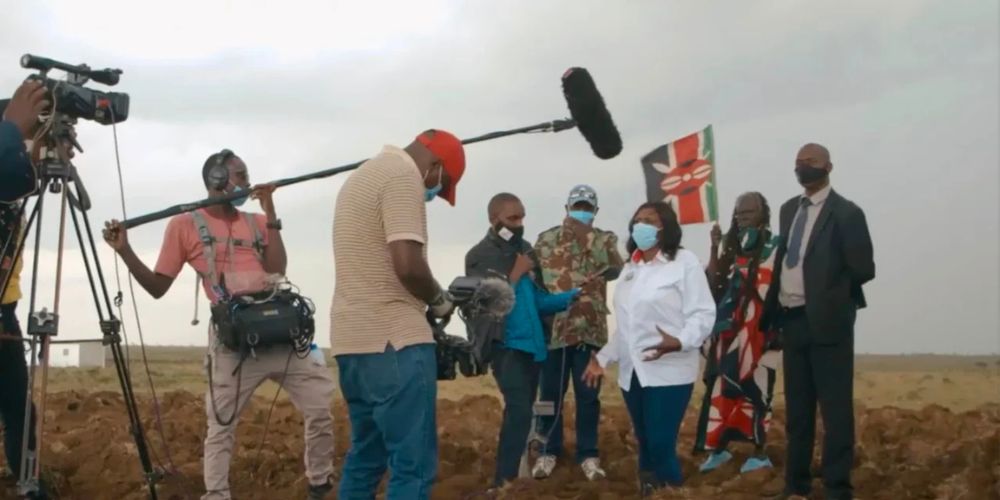
Only after this long process of preparation does the actual shooting start. The chosen protagonists are captured in their actual existence. Here, the possibility of rest surprises and the discoveries made by capturing specific situations appears, but clearly, the frame of the film’s «message» is completely set before, followed by an edition, where «useful» scenes will be set up into the narration of the work, not necessarily following the chronology of the real events.
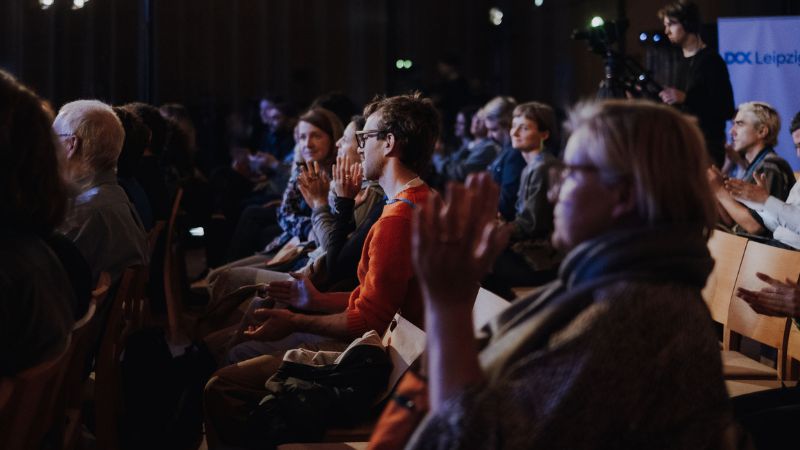
Undoubtedly, we are presented here with a certain documentary type, the commanded one, settled by a strategy oriented to public recognition and commercial success. The border between documentary and fiction is significantly fragile here. In a certain sense, we are confronted with a storyboard realised with existing people playing themselves. It is also mixed with real unforeseen figures, some of whom sometimes need to hide their identities.
Here, we discover the contrast to an outward-looking documentary style, which starts to discover realities that are still unknown. Indeed, the previous type of documentaries had an increasing problem with their #funding because the concerned organisations and institutions increasingly asked for detailed scripts from the beginning.
This brings us to another panel of discussion in the presence of different documentary filmmakers and producers, who refer to their daily problems to define their project from the beginning as a documentary or fiction for their budget requests. In fact, it’s the submission documents that ask, define and create a «real» border between the genres. In factual realisation, the editing process is evident already, transforming the ideal of a pure capture of reality into an illusion, not to mention the transforming impact that the presence of a camera produces for the acting protagonists.
A pragmatic proposition to define a work would be to see the different working processes, more precisely, how the script settings allow research and integrations of unexpected observations. Also, it may be evident that for strategic reasons in certain political circumstances, it seems useful to present a film as fiction during the shooting process, even if an attentive documentary-based foundation made the work possible.
Only after this long process of preparation does the actual shooting start.
For #Christoph Terhechte#, artistic and managing director of #DOK Leipzig#, the spectator’s attitude when looking at the work is decisive. Even scenes with seemingly spontaneously filmed people may be the result of long discussions and orientations given before the shooting. Still, the category of doc festivals may be helpful in finding reasons for «documentary» filmmakers and for their protection while at the same time granting a certain promise regarding the public’s expectations. In any case, asking for a higher degree of tolerance concerning the funding institutions facing hybrid forms would be too much wishful thinking. Terhechte claimed that we have no truth but only perspectives; for example, the German «Raison d’état» concerning #Palestine is not more than a perspective to be discussed.
Still, this statement was commented on, asking if all perspectives are valued and truthful in the same way. Moreover, are we not confronted with dominant, manipulating perspectives on subjects, against which different perspectives should be pointed out more?
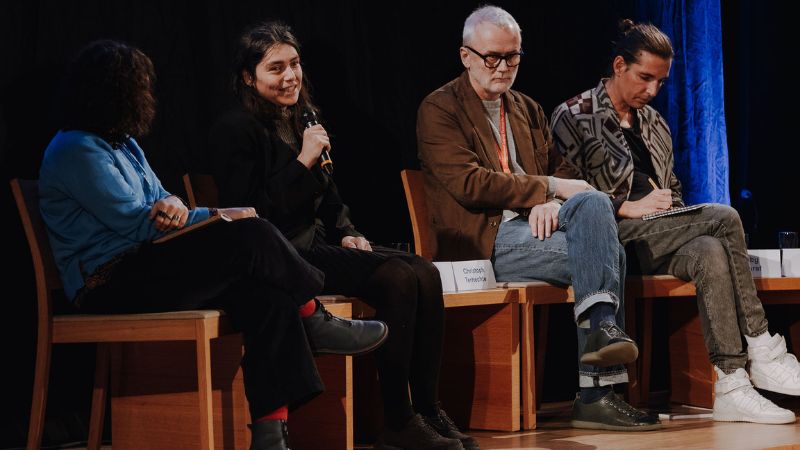
Documentary production has changed a lot during the last decades. Platforms like #Netflix produce a certain kind of documentary accompanied by certain expectations. These higher budget standards cause a risk of losing the advantages of realising low-budget productions, which search for unknown people and realities.
Godard’s request to take a camera and go out almost seems impossible today. But even for less radical forms, the profit request can create a conflict between the film’s realisation and the filmmaker’s original intentions. Producers today need to offer a distribution strategy, and so the concerned criteria here change permanently. The impact of distribution possibilities, therefore, determines the realisation changes in a profound way.
For festival programmers, this conflict takes the form of choosing films they love or those they estimate will satisfy the public’s expectations. How far can this challenge go, especially for German festivals like the Berlinale and DOK Leipzig, which are based on the presence of a huge local public? The actual expectations for documentaries are increasingly characterised by requesting social, political, and economic changes.