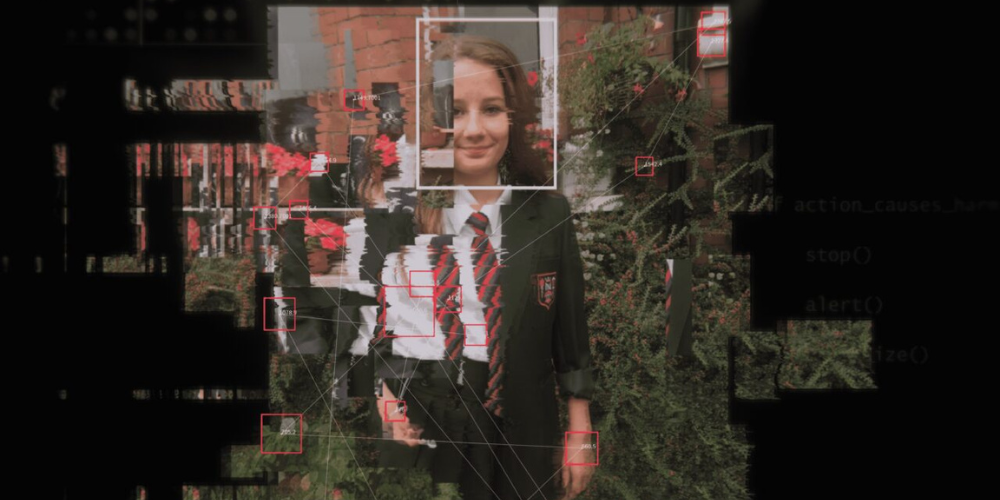
The Thessaloniki International Documentary Film Festival created a tribute called «AI, An Inevitable Intelligence.» This resulted in different documentaries about artificial intelligence (also made by), VR installations, a performance, and a masterclass called «AI and Art Experience.» All impressive.
Is Artificial Intelligence (AI) somehow inescapable today as a ‘necessary evil’? Besides all the enthusiasm, there are a lot of concerns, which I will try to elaborate on here.
First, as expressed in the festival film In the Belly of AI – what kind of thinking or ideologies are behind this new development of technology with stronger computers, equipment and algorithms? The philosopher and historian Emile P. Tores mentions the acronym ‘TESCREAL’, which sums up several isms: Transhumanism forwards the posthuman body, full of tech prostheses and equipment to augment our senses and thinking. Then Extropianism, Singulatorianism, Cosmism, Rationalism, Efficient Altruism, and Long-termism. The last one looks forward to colonising and spreading what we can build as a multi-galactic civilisation. For many of us, these ‘isms’ would sound like a fantasy of a science fiction project where technologically augmented immortal post-humans will colonise the entire universe …
But look around you. We are getting there, although it takes time, maybe not for us, but for some generations ahead. These ways of thinking have existed for a long time, and now, new innovations are bringing their manifestations forward. It happens with huge capital and financial investments into companies like OpenAI (ChatGPT), DeepMind, Anthropic, xAI or the known Google, Facebook and Microsoft – or Elon Musk’s Starlink, X and SpaceX. These and other AI-tech companies have all rocketed the share value on the stock market – as today’s new financial economy is based on expectations for the future.
As new tech giants promise the advent of a better humanity, concrete data centres are pop up all over our landscapes – and dry up rivers.
AI and its damage
One aspect of AI is the broader AGI (Artificial General Intelligence), which is developed by the huge knowledge and information databases you can access through AI search engines like ChatGPT, DeepSeek, or Bing. But also how such AI/AGI will be used in the military, medicine and other fields – to make important decisions. One concern here is what they call ‘Superintelligence’, where AI exceeds human intelligence, that it will not become controllable anymore, with the risk of destroying humanity. Tests have already been made to come up with new ideas where AI machines are scoring higher.
The way of thinking from those ideologies (TESCRAL) has two especially destructive effects, as shown by director Henri Poulain’s investigations in the mentioned In the Belly of AI. As new tech giants promise the advent of a better humanity, concrete data centres pop up all over our landscapes – and dry up rivers. Did you know you spend half a litre of water to machine-cool by asking a few questions in ChatGPT? Also, training a single AI model – according to research published in 2019 – might emit the equivalent of more than 284 tonnes of carbon dioxide (nearly five times what the entire life span and building of one car causes). This is expected to grow by 50 percent soon. Our planet continues to heat up, acidify our oceans, ignite wildfires, throw superstorms, and drive species to extinction.
However, millions of workers around the world prepare billions of dollars of data to feed Big Tech’s voracious algorithms at the cost of their mental and physical health. For example, that African woman works all week, sitting 10 hours a day in front of a screen to annotate pictures, for a total of 10 dollars.
Although the damage to our environment and workers is hidden in the belly of AI, people with these ideologies believe that such damages (or deaths) are necessary to achieve a higher long-term goal …

AI and films
From the first life-changing inventions, like the first fire, then electricity and the wheel, will AI give us a new paradigmatic shift?
Some of the questions about AI in Thessaloniki were also raised in Ridley Scott’s sci-fi film Blade Runner back in 1982. It raised profound questions about the nature of life and consciousness – set in a dystopian future where humanity has created androids, known as replicants, that are almost identical to humans. When some of these androids rebel, they have to be tracked down and eliminated. But were they ‘alive’, as they could ‘dream’? And could a romantic relationship between humans and machines be possible? The film raised the question of whether artificial intelligence could become an object of emotional connection. And now that we have entered into superintelligence, what will ‘humanity’ be in the future? The development of robots, or artificially created replicants which display emotions and memories – will they even express fear of death? Is the capacity for empathy and self-awareness what ultimately defines the ‘human’ nature – regardless of biological origins?
As shown at the Thessaloniki festival, several ‘documentaries’ or let us call them films, use AI-generated voices, like About a Hero, the festival’s opening film, where Werner Herzog’s (but simulated) recognisable voice-over is dominant throughout the film. The film was constructed with a script made by AI trained on his body of work – all allowed by Herzog, although he didn’t know for what. The same voice simulations were used in the remarkable film The Helsinki Effect (shown at CPH:DOX) for the voices of Brezhnev and Kissinger.
And what if you want to make a new film that AI mainly creates? As was presented in the book that followed Thessaloniki’s section, An Inevitable Intelligence, in a text by George Drivas, you just do the following: Make a script about a person who wakes up without any memory of the past who asks his computer digital assistant «Tell me who I am». Then, with a bunch of images made by apps like DALL-E and Stable Diffusion, and later with Midjourney, these could be made into video by Runway’s Image-to-Video. With BasedLabs’ AI model, you can do face-swaps (faster than with Photoshop). Sometimes, a need for 3D depth in a photo was made by LeiaPix (Immersity AI). The voices were built using ElevenLabs through short voice samples (as described above). And what about music? Maybe it was created through Suno AI or AIVA? Well, a little need for a real human voice was added at the end of this film called The Biography of a Software.
More artistically was the idea to make a new version of Stanley Kubrick’s sci-fi film 2001: A Space Odyssey (1968). Another magazine at the festival was written only in Greek, so I translated it using AI (see citation below). There was a new 2001 script called 3001: The Last Vision. We can read about the mystic monolith standing there on the stony planet (you remember 2001?): «The Monolith towered before him, vast, timeless. It was no longer a simple black column. Entire universes folded into its surfaces as if it were a gateway to unknown dimensions. – ‘You are the Creators.’ The answer came not in words but in the knowledge channelled directly into his mind. The Monolith was not just a tool. It was the very vehicle of evolution. It is not a separate intelligence but a principle, a cosmic algorithm that shapes and reshapes life. – ‘The human species has been tested’, the voice said. ‘It has passed the critical point.’» And then what follows is: «Frank understood. There was no longer a destination. No Earth, no Europa, no alien saviours. Only a path into the unknown, where humanity would no longer be imprisoned in matter …». Not badly scripted, uh?
The AI arms race experts had warned about for years is now real.
AI and Warfare
Now, my main task is AI and warfare. The AI arms race experts had warned about for years is now real. «Beware of AI,» Elon Musk said in 2014. Three years later, Vladimir Putin stated, «Whoever becomes the leader [in AI] will become the ruler of the world.» Noam Chomsky, Stephen Hawking, and others then backed a chanceless petition against the development of autonomous weapons.
In the great festival film Flash Wars: Autonomous Weapons, A.I. and the Future of Warfare by Daniel Andrew Wunderer, we follow ex-hacker Alberto Pelliccione into a secret world of spy software, surveillance, military contractors and cyberweapons sold by European companies to authoritarian regimes. Pelliccione tells us that he was proud of their developments as long as they were used to track drug smugglers and help people. But the market changed with the new wars, and he withdrew.
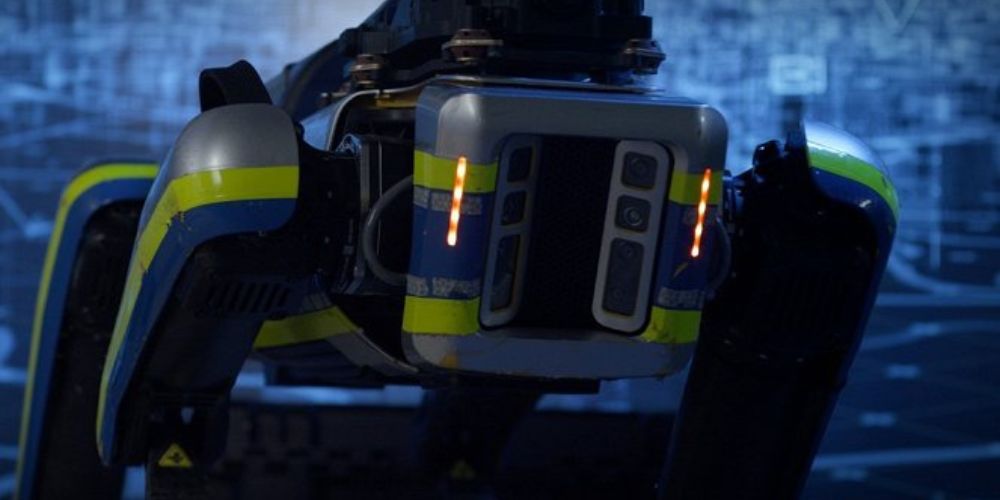
Today’s military controls kamikaze drones with AI. The New York Police Department has already used robot dogs – one time with a ‘booby-trap’ that exploded and killed a hostage taker when he touched it.
Flash Wars also explores the deep philosophical, legal, ethical and material overtones of machines that now can kill. What would we feel if someone close were killed just by a programmed machine – what is then happening to the dignity of death? In the film, a government woman states that AI makes warfare more human. Well, I think AI hasn’t really changed the essence of war; rather, it has sped up more effective killings. Clean warfare? No, war is always dirty.
The director of Flash Wars meets the manager of the company Nexter Robotics – one of the many companies suddenly worth billions on the stock market – he is proud of how his spy products are built with intelligence to learn from the surroundings, not only GPS signals (that can be jammed!). And when will killer robots kill by face recognition? The new method is to send in drone swarms that attack together. And why not establish a company to train drone pilots – your stock share rockets … Someone in the film also talks warmly about the 6th generation of fighter jets that work with huge connected networks, maybe stretching down to smartphones under surveillance in the streets. Wunderer visits many enthusiastic companies around the globe, like Palantir AIP, Kitchener, and Ghost Robotics. And meets new billionaires following the military-industrial complex nourished by the war in Ukraine or against Gaza – where safety mechanisms come last.
Flash Wars visits one South Korean woman, though, who, as a child, once looked up to Bill Gates… But what can one woman do to protest these new, huge, uncontrolled developments? At least AI-skilled Ajung Moon has tried for years to campaign for regulations, as she knows what ‘robots’ can do. However, as she says, when small states are willing, big states are not. This topic was discussed at the United Nations for some years but didn’t go through.
As the film Flash Wars title indicates, ‘flash’ can happen, as in the stock market, when the speedy financial algorithms nearly went spinning and were out of control, taking the whole stock market down. Will this soon happen with all the technology and the escalating military race we witness – also now in Europe?
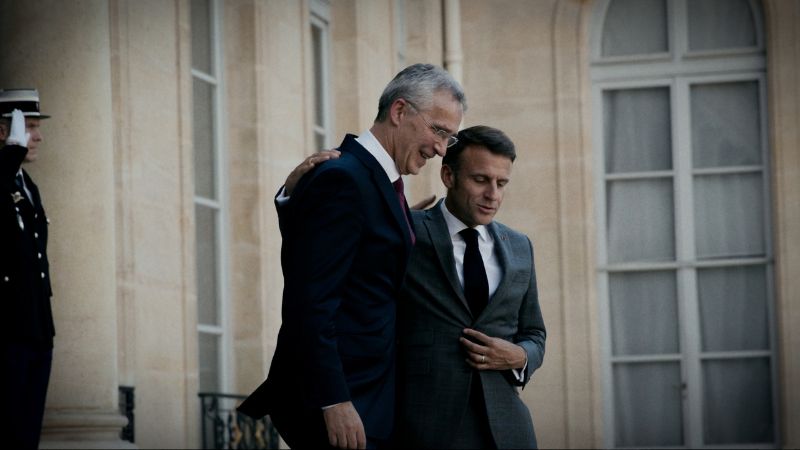
At CPH:DOX in Copenhagen, the opening film was Facing War, which I would characterise as a superficial tribute to NATO – and its leader, Jens Stoltenberg, with his coquetry and patting on the back among Western political leaders and President Zelensky. Why did the Norwegian director Tommy Gulliksen make such a one-sided film without a look at the undiplomatic long NATO/US provocation against Russia, the Minsk agreement, the military industry, and ethnic Russians in Ukraine? Why ‘hide’ this hell of mass killings that NATO and Western weapons are contributing to (besides Russia)? In what was and is a ‘proxy war’ originally to weaken Russia — as the US now calls it, where today’s President Trump is likely to change this ‘heroic’ NATO the film portrays? Then, I rather prefer the AI voice-supported (as mentioned above) film The Helsinki Effect, eminently made by Arthur Franck – with everything that today’s NATO (Facing War) is not. With great diplomacy to keep up respect for borders and real exchange of people and information – masterfully portrayed by the 1975 conference with leaders from 35 nations – on both sides of the Iron Curtain –that is said to have led to the peaceful dissolution of the Soviet Empire later. Here, humans and diplomacy are what leads to peace – not the military industry’s marionettes that can only talk of more or AI-driven weapons – to be used against ‘enemies’.
AI and philosophy
Let me end a little philosophically. As written in the festival AI book, referring to the German philosopher Martin Heidegger, George Chatzivasileiou writes: «According to his thinking, the ‘essence’ of our age is technology, but ‘the essence of technology is by no means anything technological.’ Technology is not a tool, as everyday and philosophical thought often perceives it. Technology is ‘a way of revealing’ Being – and, indeed, the dominant one of our time.»
Well, as I have read Heidegger for years, I can nod to this, as our mode of revealing, or seeing something as ‘true, is so dominated by utilitarianism, and Nietzschean ‘will to power’ – as nihilistic or cybernetic thinking called ‘will to will’ by Heidegger. When treating everything, also humans, as objects, as resources to be accumulated and used (like weapons) – by ‘enframing’ everything (‘Ge-stell’) – then we have forgotten to really understand Being, us as beings able to let each other, nature and our environment be. And we all end up driven by today’s ideologies as cogs in these ‘modern times’, becoming objects ourselves – ‘fear-driven’ as consumers or soldiers.