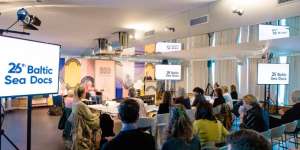
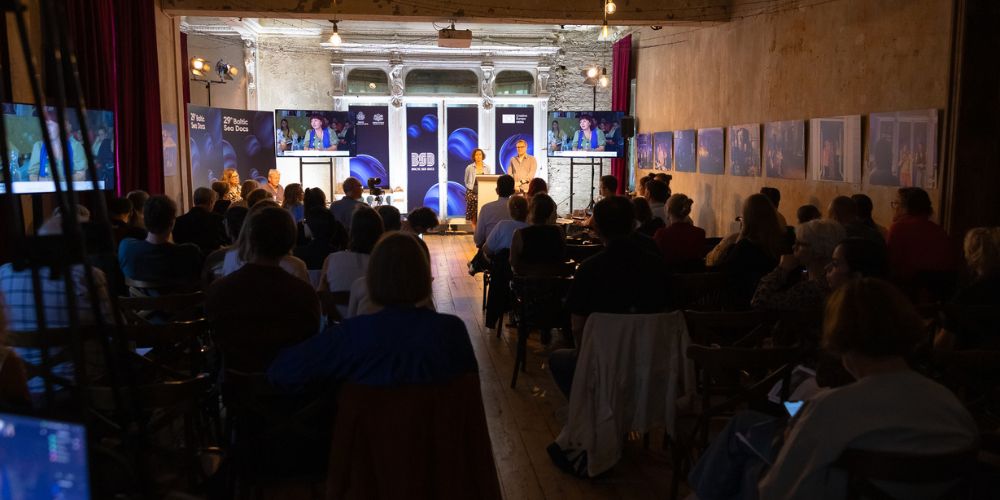
Riga’s late-summer light can feel cinematic, hard edges against pastel façades, rain threatening, then stepping aside. The city has leaned into a feline mood since Gints Zilbalodis’s Oscar-winning animated feature, Flow, with the now-iconic black cat reading as an unofficial sigil, watchful and curious, chiselled into cornices, as sculptures, and souvenirs. It fit the week. From 31 August to 5 September, the 29th Baltic Sea Docs (BSD) gathered twenty-six projects for workshops, pitching, and one-to-one meetings, with public screenings running from 2 to 7 September. The scale, again, felt appropriate, rooms close enough for frankness and a city accessible enough for chance encounters.
BSD remains the Baltics’ only dedicated documentary industry forum, run by the National Film Centre of Latvia with Creative Europe MEDIA and the Ministry of Culture. The event convenes more than 100 professionals each year from the Baltic rim and its hinterlands, an intentionally compact community that favours real decisions and dialogue over industry spectacle. BSD has always doubled as a civic invitation, something I argued last year in Modern Times Review when I covered the 2024 edition’s panels and screenings. That continuity was visible again in 2025, as a habit formed over decades.
BSD’s value does not reside in the ten minutes or so a project team spends at the lectern. Pitching unfolded at K. K. fon Stricka villa in Riga’s central Briāna/Miera quarter, a revived brewer’s mansion with a shabby‑chic interior, a leafy garden and a hipster creative‑quarter feel. It resides in the days before that: the preparatory workshop with Tue Steen Müller and Mikael Opstrup, leading a group of tutors that included Salomé Jashi, Mia Halme, Darya Bassel, and Phil Jandaly.
Decision makers were also a deep bench. Arte and ZDF, NHK, TG4, SWR, LRT. Sales companies such as Dogwoof, CAT and Docs, Rise and Shine, Lightdox. Programmers from IDFA, Sheffield, DOK Leipzig, Tallinn Black Nights, goEast, and Thessaloniki. The result was concrete routes to completion and collaboration, mentors aligning with editors, sales agents shortlisting for labs, and broadcasters giving precise notes on access, cut length, and windows.
Pitching unfolded at K. K. fon Stricka villa in Riga’s central Briāna/Miera quarter, a revived brewer’s mansion with a shabby‑chic interior, a leafy garden and a hipster creative‑quarter feel.
A seminar to kick things off
The 2 September CE MEDIA Seminar asked a practical question. How to reach young audiences without sanding off complexity. German documentarian Sigrid Klausmann shared her experience making nonfiction that is honest and safe for children and teens. TG4 commissioning editor Róisín Ní Thuairisg demonstrated how short-form social campaigns can direct viewers toward longer public service content, including that of the highly controversial Northern Irish rap act, Kneecap. From New York City, DCTV’s Johnny Ramos and Jesse Perez Antigua presented youth training models that turn spectators into makers, a pipeline solution rather than a marketing trick.
What the slate said
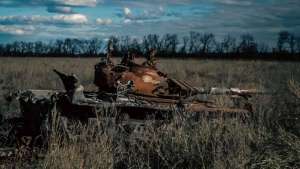
Across the two pitch days, an arc emerged, grief giving way to repair and then to a cautious renewal. In our times of heightened hot conflict, war and its long shadow set the tone. Missing in Action from Ukraine and Norway follows a sister’s search that evolves into advocacy for other families of the disappeared. Women and War from Poland, Germany, and Ukraine centres three survivors of captivity and sexual violence in therapy. Face It Without Fear from Sweden and Ukraine stages a father and daughter in a difficult conversation about an occupier’s mindset. None sought simple catharsis. Each moved beyond frontline reportage toward the second-order labour of care, memory, and accountability.
The intimate turn was no less urgent. Many being proposals for living with what cannot be solved. Latvia’s A Guide to Grief treats the camera as a ritual after a family suicide. Estonia’s Threads of My Ancestors arranges a mother–son dialogue about silence and diaspora. Lithuania’s Rita promises the long patience of a five-year follow nested in poverty and care. RepairMan finds a language for trauma and tenderness in the unlikely figure of a washing-machine repairer.
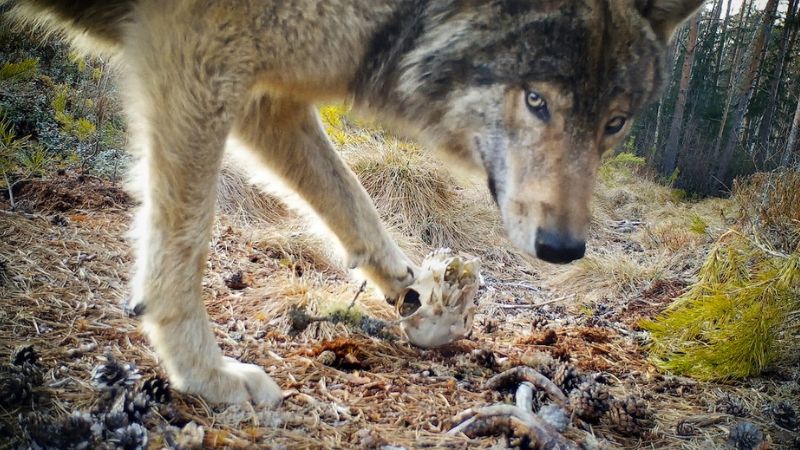
Formal risk also had real room on the BSD slate. Creaturama, Epic of the Animals from Finland and Estonia is composed of years of trail-camera footage, an attempt to cede visual agency to something other than humans. Kind of Adults from Hungary is a five-year collaboration with Gen Z teenagers, a diary that matures as its participants do.
Sport served as a mirror for politics and endurance. Operation Champion from Georgia follows a wheelchair fencer triangulated by a parent, a doctor, and party functionaries, asking where devotion ends and exploitation begins. Brake for Gold from Poland rides alongside a Ukrainian breaker chasing an Olympic berth from forced exile. The Wars We Play parks a locker room beside a ruined stadium and lets wartime logic interrogate the idea of games. The buried question is blunt. Should a nation at war invest emotional capital in sport, or is normalcy itself a form of resistance?
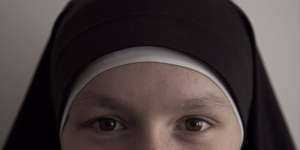
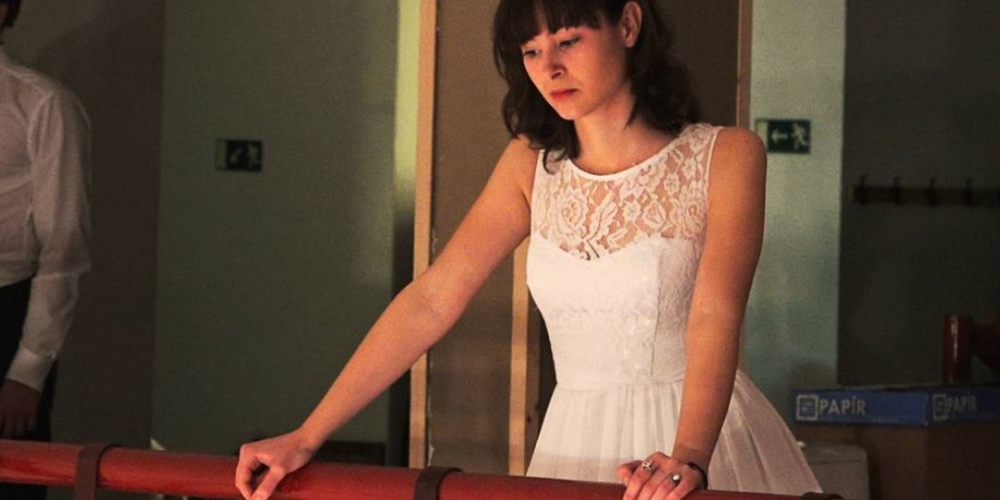
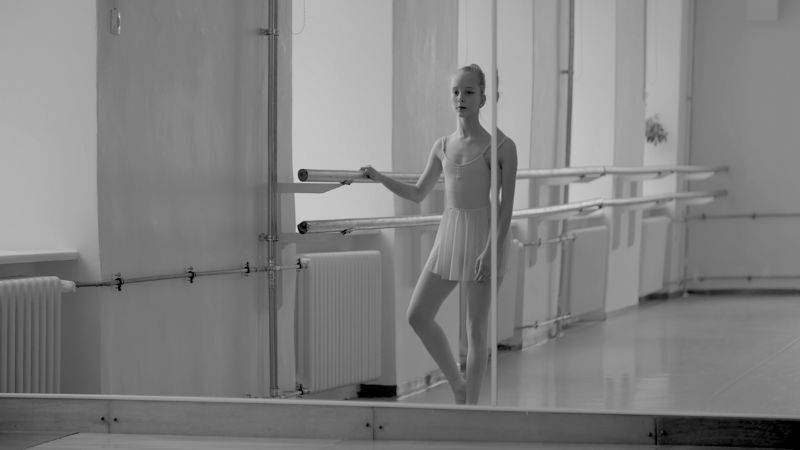
Elsewhere, identity and performance are threaded through personal portraits. Elīna Garanča, The Symphony of Life asks what it means to pause or continue at a pinnacle. Bride of the Invisible by Audrius Stonys looks for holiness outside institutions. The Perfect peers into ballet’s rituals and the myths that surround precision. Of Boys and Men reframes masculinity as a late coming-of-age. These are portraits and also studies in the reputational economies that orbit people who perform.
Travel-sensitive titles added another register. The Roads of Forgotten Dreams follows photographer Luca Berti through the Baltic and Nordic hinterlands where craft and custom persist, landing somewhere between ethnography and a modern European reading of Paris, Texas. Garden of Anna from Latvia and India reenters missionary legacies and belief, conviction complicated by empire and time. For levity, there was Rapland from Finland, a small-town rap musical of sorts that finds swagger as autobiography and dignity as community art.
Then, the «Coming Soon» forum reserves space for films in post-production from previous editions, projects that return with a rough or near-final cut, looking for last-mile partners in editing, finishing, distribution, or festival positioning. Projects that pitched here earlier return to calibrate their launch, and many of them then surface in the next year’s public program as completed films. In the Winds of the Icefields, from Estonia follows an 87-year-old ice-sailing grandfather and a grandson racing against winter and time. My Family and Other Clowns from Estonia catalogues parenthood’s chaos with wry tenderness. Shut the Fuck Up (which also featured at Sarajevo’s Docu Talents from the East slate) from Ukraine cuts at the tempo of real danger as an activist runs a public gauntlet. Under the Red Light from Lithuania watches a celebrated photographer strip away the labels that once fixed him. The mechanism closes a loop, since projects that pitched here earlier return to calibrate their launch and often surface the following year in public programmes as completed films.
Public screenings like a second workshop
BSD opened its public program on 2 September at Splendid Palace with Dmytro Hreshko’s Divia, an observational chronicle of environmental devastation in Ukraine. Modern Times Review has followed this title’s path to premiere, framing it as a nature story rarely discussed inside the war effort and noting that devastation to land, animals, and water is part of the war’s cost. Multiple critics since its Karlovy Vary premiere have echoed that argument, which gave the Riga screening an unmistakable charge.
The program moved briskly through recent festival-tracked titles. Coexistence, My Ass! is Amber Fares’s politically live portrait anchored in the comedy of Noam Shuster Eliassi. 9-Month Contract is a study of economic precarity feeding a pipeline of commodified bodies. The Helsinki Effect arrived with a preexisting conversation in Modern Times Review and channels and trade press about the 1975 Final Act and its contemporary echoes. Other screenings rounded out the week’s civic face. Writing Hawa, My Dear Théo, On Sacred and Profane, Girls Don’t Cry, and Letters from Wolf Street created a small republic of nonfiction.
In a continent crowded with markets, Riga keeps its breathing space, and that space is what lets films arrive with clarity and leave with momentum.
A place amongst the markets
Set against Europe’s documentary market heavyweights, the difference is instructive. IDFA Forum, CPH Forum and Market, VdR Pitching at Visions du Réel, Sheffield DocFest’s MeetMarket, and Sunny Side of the Doc are multi-strand hubs that pull hundreds of buyers and scores of funds. They run distinct tracks such as Forum Pitch, Producers Connection, and Rough Cuts at IDFA, CPH:FORUM and Rough Cut labs in Copenhagen, and VdR Pitching with Work in Progress in Nyon. Riga keeps the circle tighter, one mentored selection, two pitch days, dense but navigable meetings. In a continent crowded with markets, Riga keeps its breathing space, and that space is what lets films arrive with clarity and leave with momentum.
The partner awards at BSD serve as bridges outward, providing teams with accreditations and access to IDFA, Sheffield, and Prague’s East Doc Platform, making the path from compact forum to major market a tangible reality. Missing in Action received the Baltic Sea Docs Award, a bespoke consultancy for a grief-to-service narrative that needs tailored next steps. Women and War took Movies That Matter, the human rights platform that honours testimony and protects participants. Operation Champion earned DOK.fest München industry access. Kind of Adults won the East Doc Platform Award, a natural escalator for a Central European coming-of-age. The Perfect received the IDFA and BSD Collaboration Award, a door into Amsterdam’s mentoring ecosystem. Creaturama, Epic of the Animals doubled with Sheffield DocFest participation and a TV3 Group broadcast slot. Threads of My Ancestors picked up the BBposthouse post services grant, precisely the oxygen a delicate mother and son essay needs.
A closing thought
As Riga’s black cat slips back to the rooftops; BSD leaves the city the same way, light on its feet and already cutting the next scene.