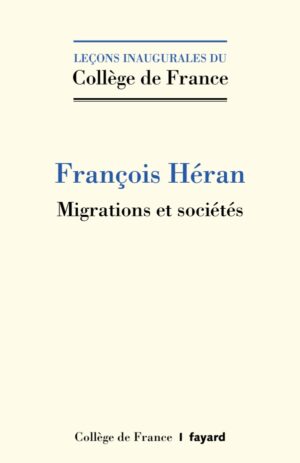
Collège de France has, since its establishment in 1530, employed scientists – and eventually women – who are at the forefront of their respective fields, research areas, or scientific methods. The professors can dedicate almost all their time for the rest of their careers to what they consider most important. Each year, they present their research. Previously, the presentations were reserved for royalty and the noble elite, but today the lectures are free and open to everyone. Here, one can follow a single presentation or regularly attend lectures by some of the world’s most groundbreaking researchers, regardless of their field. Among some of the well-known social scientists who have previously held lifelong professorships at Collège de France are #Roland Barthes#, #Fernand Braudel#, #Pierre Bourdieu#, and #Michel Foucault#. François Héran is thus following in good footsteps. And suppose any of Ny Tid’s readers find themselves in #Paris on a Thursday in February. In that case, they can show up well in advance of 2 o’clock at the Amphithéatre Marguerite de Navarre, located at Marcellin Berthelot Square in the 6th arrondissement of Paris, to hear François Héran lecture on migration.
Challenging field
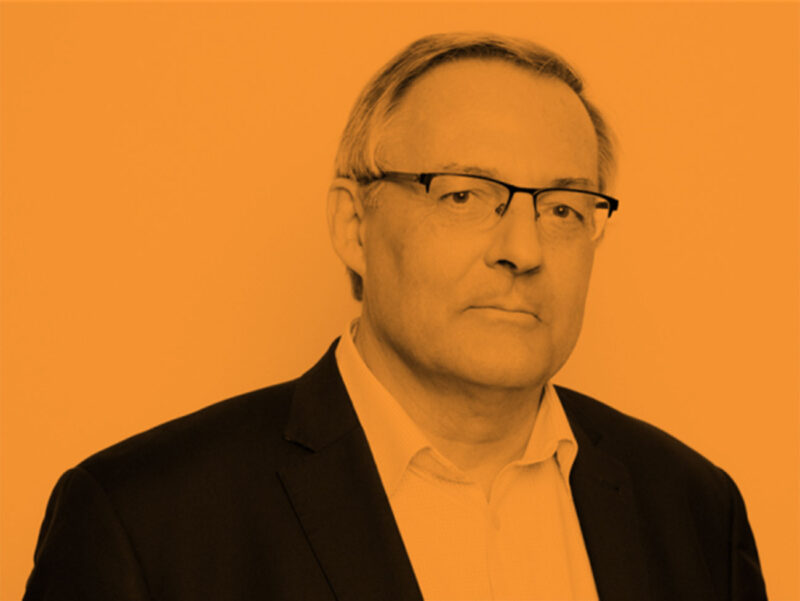
Héran has many lengthy ethnographic fieldwork experiences in #Bolivia and #Spain but is also educated in demography and statistics. At the age of 65, he published a number of significant works on migration at the intersection of these disciplines. The reason why few have heard of him in #Norway is likely because he almost exclusively publishes in French and Spanish.
In Migrations et sociétés, Héran explains that migration studies are a difficult research field because it is so politicised – everyone has an opinion on migration. At the same time, the vocabulary used when talking about migration is very unclear; identical words carry different meanings. This way, the public debate is characterised by seemingly contradictory facts, which in turn create staunch attitudes. For example, the French population consists of approximately 11 percent #immigrants. However, in everyday language, immigrants often include the children of immigrants, thus representing a total of around 23 percent of the population in France. This is roughly the same as in the United States (26 percent), Germany (23 percent), and the Netherlands (22 percent).
In Norway, immigrants comprise about 17 percent of the population, including children of immigrants. If we did not include children who are Norwegian citizens born in Norway to foreign-born parents, the percentage would drop to 14 percent. In our case, there are about four times more immigrants from #Europe (390,000) than from #Africa (94,000). In France, it is different – nearly half of all new immigrants come from France’s former colonies in Africa.
Héran points out that the proportion of migrants in the world has been remarkably stable over time: for the past 30 years, between 2.8 percent and 3.4 percent of the world’s population has officially been migrants. Even if we add a few million undocumented migrants, it remains the case that more than 95 percent of the world’s population never moves from their home country. The Chinese and Indians, in particular, are highly stable – 99 percent of Chinese and Indians never migrate.
False crisis
Although 2015-2016 represented a temporary exception in the number of international migrants, it is wrong to call it a «migration crisis». Europe received 2.4 million migrants in one year, increasing the European population by slightly less than 0.5 percent. Over the past 30 years, immigration has caused the European population to increase by approximately 0.3 percent annually. Therefore, the increase in 2015 and 2016 was a marginal change, even though politicians and mass media made it sound like a crisis, claims Héran.
However, some countries received a disproportionately large share of migrants in 2016. #Sweden received the most asylum seekers relative to its own population – over 7,000 asylum seekers per one million inhabitants. #Germany received about 5,500, and Norway about 2,500. France granted approximately 500 asylum applications per one million inhabitants, while the corresponding figure in #Poland, which received the fewest in Europe, was 10 (!). A better and fairer system must be established to process asylum applications in a global world. Without this, we will have an uneven distribution that will create significant conflicts, according to Héran.
Many believe that people primarily migrate from poor to rich countries, but that is not the case. Héran explains this by stating that the legislation in rich countries is too rigid, and the personal finances of the poor are too strained to enable migration. People who migrate often move short distances. The vast majority of African migrants settle in other African countries. They have always done so. It is cheaper and easier regarding family, language, food, and culture.
Héran also points out the paradox that it is easier to emigrate than to immigrate. #Human Rights# give everyone the right to leave their own country, but no country is obligated to accept them. Economic and/or knowledge capital often determine whether another country will welcome you. Thus, current migration laws contribute to maintaining #inequality and therefore go against UN Sustainable Development Goal 10. «It is we who have shaped the world in a way that many feel compelled to migrate. We are responsible for people wanting to emigrate, so we must also face the consequences of immigration», concludes François Héran. It is not easy to avoid becoming political, even for someone who starts the book by asserting that one of the weaknesses of migration studies is how politicised the field is…