Written with Truls Lie.
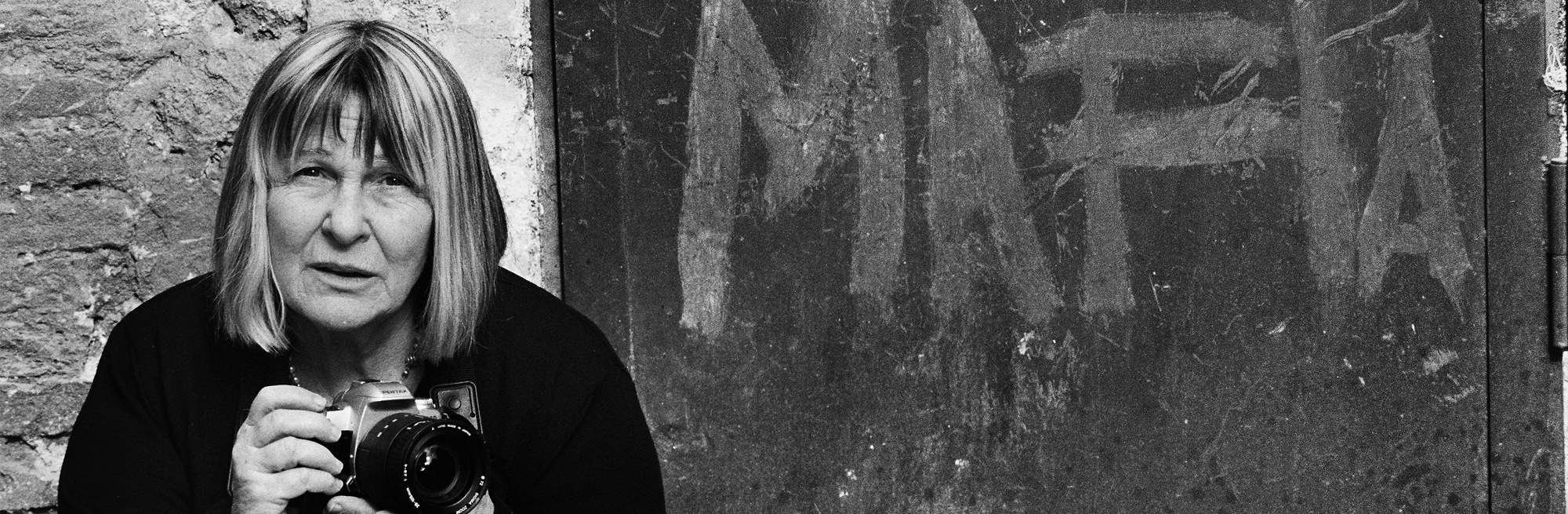
Shooting the Mafia (2019, by Kim Longinotto, read the review here) is a portrait of the life and work of Letizia Battaglia – the only photographer who took photos of the Mafia in the bloody 70s. It was the time in Sicily when people were killed by the Mafia or Cosa Nostra on a daily basis, and Letizia captured these tragedies in her touching black and white photos.
When you started taking photos to accompany your articles when you were 40, you realised that you preferred photography to writing. Was it a coincidence or perhaps destiny?
I don’t believe in destiny. It was a choice. I was the only Mafia photographer at the time. I really opposed the Mafia’s actions with all the means I could find. Yes, I’ve received death threats and was asked to leave Palermo, but I stayed and kept doing it. It’s not only in my photographic work that I’ve resisted corruption, injustice and the wrong corners. I have been fighting against it – with and without my camera.

Your photos of the Mafia are taken in extreme environments, but there’s so much poetry and sensitivity in them. How do you manage to achieve this in such a tough situation?
Photography is a fantastic instrument, which is dependent on the person who uses it. Photos also reflect the personality of the photographer. If a person is cruel, the photos will reveal it. If a person has poetry and sensitivity inside of them, then this would also be visible in their photos.
As a woman you had to struggle to be able to take pictures. Do you think that you would have taken different photos if you were a man?
If I was a man, I would be different. I love photos taken by women. If a woman has talent, she is much more courageous, much more attentive, and she respects her subjects in her photos more than a man. In general, there are not many female war photographers. I think that women are more likely to explore life and what life is. Not war.

You show the brutality of the Mafia and the pain it causes. What do you think of movies that glorify mafia, for example The Godfather trilogy by Francis Ford Coppola?
It is shit. It hurts a lot if you are glorifying and honouring such phenomena as mafia, corruption, drugs and all forms of criminality. I think that the film directors who have portrayed mafia in a glorified way wanted to make a good career, but they acted irresponsibly. These kinds of films cause a lot of pain, they mislead people, and they don’t do any good for the society.
What about the book Gomorrah by Roberto Saviano? Is it a more honest portrayal of the Mafia?
I love Saviano and appreciate his work a lot. He’s very brave, precise and honest in his writing. There are very few people who are really fighting against the Mafia like him. The other good examples are the mayor of Palermo, Leoluca Orlando, who has always fought against the Mafia, and the prosecutor Nino Di Matteo, who uncovered the secret pact between the state and the Mafia. Di Matteo with his collaborators proved that, after judges Giovanni Falcone and Paolo Borsellino were murdered, members of Italian police and the government were working closely with criminal bosses. If the Mafia would stop the terrible terror, the government would reduce the sentences of the imprisoned Mafiosi.
What about the Mafia today?
Now the power of the Mafia is institutionalised. Cosa Nostra is a part of the politics, hospitals, police, real estate. In Italy, we stopped the fight against the Mafia with the arrival of ex-prime minister Berlusconi 20 years ago. Now our banal government doesn’t fight against the Mafia. The mayor of Palermo is independent, but he stands alone. Some judges and prosecutors also fight against Cosa Nostra, but the Italian government doesn’t.
It wasn’t easy for you to gain independence in a male-dominated world. First your father didn’t let you leave the house, later your husband didn’t allow you to study. What about the women in today’s Sicily? Are they still oppressed?
The women of today are much freer and have more liberty. However, many women are unemployed as there are not many jobs around. But even so, they have a lot more possibilities to govern their lives than we did. Of course, there are the immigrant women who are forced to work in prostitution. The mayor of Palermo, Leoluca Orlando, has a different opinion on immigration than the current Italian government. Orlando thinks that these people need to have more rights, so that they’re not forced to take illegal jobs, which makes them very vulnerable to exploitation.